Information on repair and maintenance of engine Mercedes cars electronically



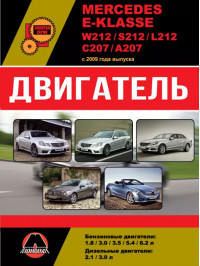
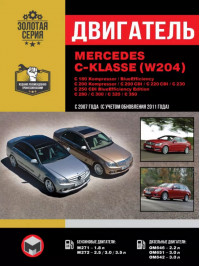
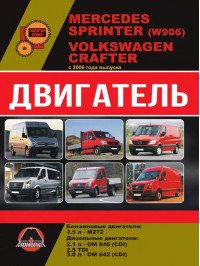

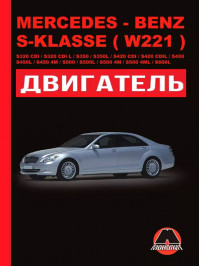

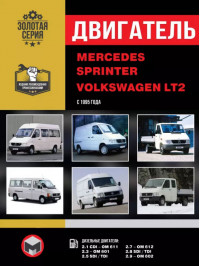

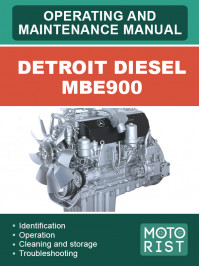
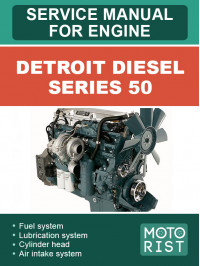
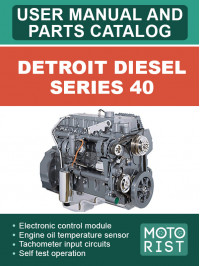
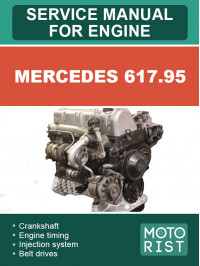
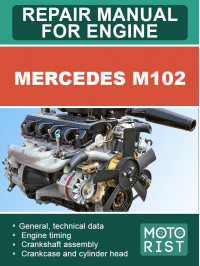
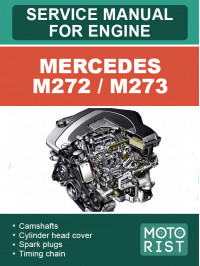
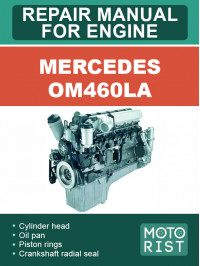
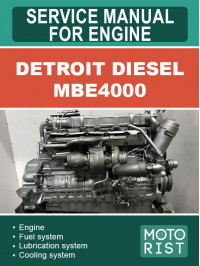
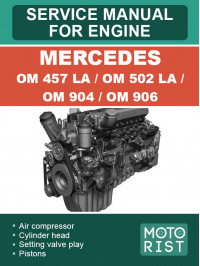
The history of Mercedes engines began more than a century ago, when engineers Gottlieb Daimler and Wilhelm Maybach introduced the first high-speed gasoline internal combustion engine at the end of the 19th century.
In 1901, the first car under the Mercedes brand was released, equipped with a four-cylinder 5.9-liter engine, which became a technological breakthrough of its time. Since then, the German concern Mercedes-Benz, part of Daimler AG, has been continuously developing engine manufacturing, becoming one of the leaders in the creation of reliable, productive and environmentally friendly power plants. The company's innovations cover both passenger cars and trucks, including commercial vehicles, SUVs and buses.
Mercedes engine generations
In the second half of the 20th century, Mercedes actively introduced turbocharging, electronic fuel injection control, exhaust gas recirculation systems and complex chain valve timing mechanisms.
The M102, M103, M104 series gasoline engines and the OM601–OM606 diesel engines, which were famous for their durability and endurance, became iconic. Already in the 1990s, Mercedes began producing engines with electronic control, multi-point injection, phase regulators and a high level of noise insulation.
At the same time, a line of V6, V8 and V12 engines with aluminum blocks, lightweight pistons and chain drive was developed. In the new millennium, the concern presented hybrid, turbocharged and fully electric power plants, maintaining the traditions of German precision and reliability.
The most popular among Mercedes owners are gasoline engines M112, M113, M271, as well as diesel OM611, OM646, OM651 and modern OM654.
Advantages of Mercedes engines
Mercedes engines are characterized by high efficiency, resistance to overheating, adaptation to cold climates and low vibration levels. M-series petrol engines provide dynamics and a smooth ride, diesel engines — low fuel consumption and excellent traction.
A characteristic feature of Mercedes engines is a reliable timing chain, the service life of which often exceeds 250,000 km, as well as a reinforced cylinder block design. Turbocharging allows you to achieve maximum torque already at low revs, and electronic injection systems (CDI, BlueTEC) provide precise fuel metering and minimal emissions of harmful substances. Cooling systems are equipped with electronic thermostats, and the engines comply with Euro 4–6 standards.
Mercedes engines are usually installed longitudinally, which simplifies access to attachments and increases the service life of components.
Modern engines have balance shafts, hydraulic compensators, dual-mass flywheels and electronic throttle valves. Most models are equipped with a variable valve timing system (VVT), which allows for optimization of operation under various load conditions.
The electronic control unit (ECU) is closely linked to other vehicle systems: automatic transmission, ABS, ESP, cooling system and climate control. Thanks to the well-thought-out architecture of the power plant, diagnostics and maintenance of Mercedes engines are relatively simple, especially with the original software and access to repair documentation.
Repair of Mercedes engines
Using the PDF manual, you can fix the following problems:
- difficult starting in cold weather,
- detonation and knocking in the engine,
- unstable operation at idle,
- increased oil consumption,
- overheating,
- vibrations during acceleration,
- dips when pressing the gas pedal,
- clogged EGR,
- lambda probe malfunctions,
- turbine malfunctions,
- oil leaks from under valve cover,
- camshaft position sensor malfunctions,
- incorrect operation of the chain mechanism,
- as well as errors related to fuel system and ignition control.
The Mercedes engine repair manual in PDF format contains comprehensive information on the design, maintenance and restoration of all major components. The documentation describes in detail the procedures for replacing timing belts and chains, adjusting the phases, replacing oil seals, adjusting valves (if necessary), diagnosing the fuel system (including the rail, injectors and injection pump), repairing turbochargers and intercoolers.
Separate sections include electrical diagrams, tables of prescribed tolerances, tightening torques and the procedure for disassembling units. The manual is intended for both service station specialists and experienced owners familiar with the technical part of the car.