Information on repair and maintenance of Mercedes-Benz engines cars electronically
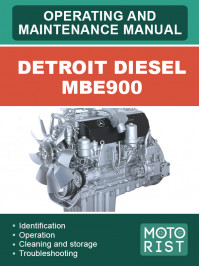
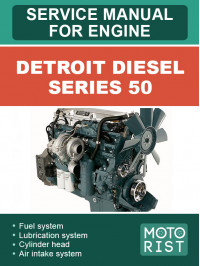
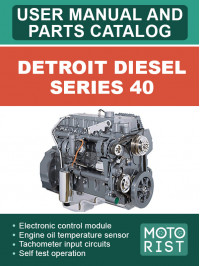
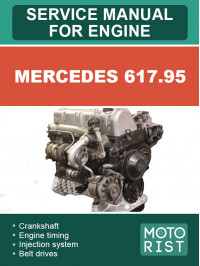
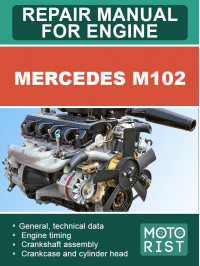
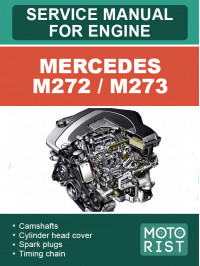
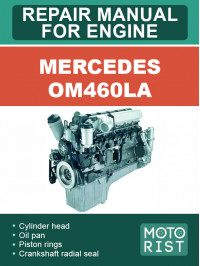
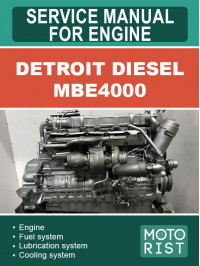
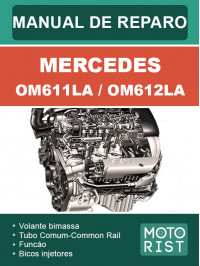
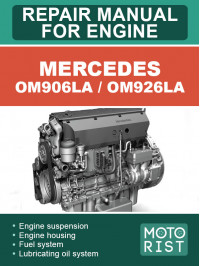
Mercedes-Benz engines have long been a symbol of premium quality and engineering excellence. The German automaker pays special attention to the balance between power, reliability, and environmental friendliness, which allows its vehicles to take leading positions in various segments – from compact A-Class models to executive sedans and trucks.
The popularity of Mercedes-Benz engines is explained by their durability, advanced technology, and high level of comfort in operation. Owners note that with proper maintenance, the engines can run hundreds of thousands of kilometers while maintaining excellent dynamic characteristics. In addition, the company constantly introduces innovations, making its engines a benchmark in the automotive industry.
History of Mercedes-Benz Engines
The history of Mercedes-Benz engines begins at the end of the 19th century, when Gottlieb Daimler and Karl Benz introduced the first automobiles with gasoline engines. These developments became the foundation of the future company, which received its modern name Mercedes-Benz in 1926.
In the 1930s–1950s, engineers focused on creating powerful and reliable units for passenger cars and trucks. During this period, a number of famous inline and V-type engines appeared, becoming legends of German automotive engineering.
Since the 1970s, the company has actively developed diesel technologies. The legendary naturally aspirated OM617 engines appeared, capable of covering 500,000 km without an overhaul. This gave the brand a reputation as a manufacturer of “indestructible” diesels.
Since the 1990s, the focus has shifted to turbocharging and electronic control. Engines have become more powerful, more fuel-efficient, and more environmentally friendly. Modern gasoline and diesel engines with indexes M and OM appeared, forming the basis of the model range. In the 21st century, Mercedes-Benz has been actively introducing hybrid and electric technologies while preserving its traditions of quality.
Specifications of Mercedes-Benz Engines
Mercedes-Benz engines come in a wide variety, from small-displacement to V12.
Gasoline engines.
- M111 (1992–2006) – a naturally aspirated 4-cylinder engine, installed in the C-Class and E-Class. Known for its simplicity and reliability.
- M112 and M113 (1997–2006) – V6 and V8 with a three-valve timing system. Renowned for their durability and used in many models.
- M274 and M276 (2011–2020) – modern turbocharged engines with direct injection technology.
Diesel engines.
- OM617 (1974–1985) – the legendary inline diesel engine, nicknamed the “million-kilometer engine.”
- OM611, OM646, OM651 (1998–2020) – inline 4-cylinder turbocharged engines, popular in Europe for their fuel efficiency.
- OM642 (2005–2020) – V6 diesel, used in the E-Class, S-Class, ML, and Sprinter, combining power with low fuel consumption.
Today, the company is developing the EQ Boost engine line and hybrid systems. Mild hybrid systems are used to reduce fuel consumption and lower CO₂ emissions. New engines meet strict Euro-6 and Euro-7 environmental standards.
Maintenance and Repair Guides for Mercedes-Benz Engines
Even the most reliable Mercedes-Benz engines require regular maintenance. Detailed Mercedes-Benz engine repair manuals in PDF format are available to car owners. They help with diagnostics, component replacement, and troubleshooting both independently and in service centers.
Such manuals include instructions for:
- timing chain or belt replacement;
- valve adjustment and timing settings;
- diagnostics and repair of the turbocharging system;
- inspection and cleaning of fuel injectors;
- fixing oil and coolant leaks;
- ECU adaptation;
- engine overhaul.
Using PDF manuals can significantly reduce maintenance costs. They contain step-by-step instructions, diagrams, and tables, making the repair process clear even for beginner mechanics.
Thus, Mercedes-Benz engines represent a masterpiece of engineering, combining reliability with modern technologies. They remain in demand for decades, and many older series are still valued on the used market.
The availability of detailed PDF repair manuals makes owning cars of this brand more convenient and cost-effective. Owners can maintain their engines themselves or with minimal expenses while preserving the legendary reliability of German engineering.