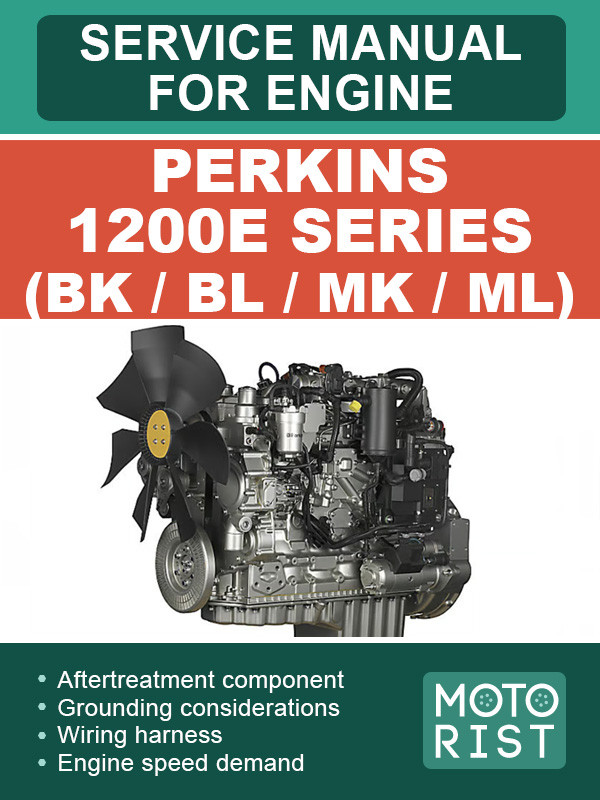
Engines Perkins 1200E Series (BK / BL / MK / ML), repair e-manual
About the manual
Engine type: Perkins 1200E Series (BK / BL / MK / ML)
Displacement: 4.4 / 6.6 / 7.0 L.
In the manual you will find
- Step-by-step guide to repair various components and assemblies
- Self-care and maintenance instructions
- Engine design and prevention information
- Information for a trip to the service station, if self-repair is not possible
About the manual
Engine type: Perkins 1200E Series (BK / BL / MK / ML)
Displacement: 4.4 / 6.6 / 7.0 L.
In the manual you will find
- Step-by-step guide to repair various components and assemblies
- Self-care and maintenance instructions
- Engine design and prevention information
- Information for a trip to the service station, if self-repair is not possible
Content
Foreword
Safety section
- Safety messages
- General hazard information
- Burn prevention
- Fire prevention and explosion prevention
- Crushing prevention and cutting prevention
- Mounting and dismounting
- High pressure fuel lines
- Before starting engine
- Engine starting
- Engine stopping
- Electrical system
- Engine electronics
Product information section
- Model views
- Product identification information
Operation section
- Lifting and storage
- Gauges and indicators
- Features and controls
- Engine diagnostics
- Engine starting
- Engine operation
- Engine stopping
- Cold weather operation
Maintenance section
- Refill capacities
- Maintenance recommendations
- Maintenance interval schedule
Warranty section
- Warranty information
Reference information section
- Reference materials
Engine and aftertreatment component overview
- Main engine sensor and actuator details
- Aftertreatment system sensor and actuator details
- System component diagrams and schematics
- Engine and aftertreatment component layout diagrams
Customer system overview key elements
- Aftertreatment connections
- Connection, power and grounding
- Indication, starting and stopping the engine
- Controlling the engine
- Aftertreatment operation and regeneration
- Optional customer installed components
- Typical customer installed component diagram
Power and grounding considerations
- Engine block grounding
- Voltage and current requirements
- ECM power supply circuit resistance
- Engine ECM power supply circuit resistance test
- Direct battery connection requirements
- Powering the engine ECM via auxiliary power supplies
- Sensor common connections
- Mandatory fuel lift pump installation
Connectors and wiring harness requirements
- Engine ECM J1 connector
- Engine to aftertreatment connectors 1206E-E70TTA only
- Diagnostic connector
- Connector terminal contacts
- Harness wiring standards
Connecting to engine aftertreatment
- 1204E and 1206E emission critical aftertreatment installation
- 1206E-E70TTA emission critical aftertreatment
- Auxiliary sensor installation and connection
Starting and stopping the engine
- Starting the engine
- Stopping the engine
Machine fan control
- Hydraulic fan control operation
Engine speed demand
- Analogue sensor
- PWM sensor - compatibility
- Throttle lock
- Multi position throttle switch
- Torque speed control TSC1
- Arbitration of speed demand
- Acceleration and deceleration ramp rates
- Throttle behavior during engine governor changes
- Definition of engine speed points
Cold weather engine operation and starting aids
- Control of glow plugs by the engine ECM
- Ether cold start systems
- Cold weather regeneration aid
- Heated breather
Engine and aftertreatment monitoring – high level indicators and operator displays
- Engine management system status indication
- Gauge drivers
- Lamp outputs
- Activation of J1939 indicators
Engine and aftertreatment monitoring system
- General information
- Engine monitoring and protection
- Aftertreatment monitoring and protection
Monitored inputs for customer fitted sensors
- Air filter service indicator – air intake restriction switch
- Coolant level switch
- Water in fuel trap switch
- Auxiliary temperature sensor
- Auxiliary pressure sensor
Regeneration system and customer interface
- Low temperature regeneration system operation
- Low temperature regeneration operator interface
- Low temperature regeneration system operation example
- High temperature dpf regeneration system operation
- Total regeneration system operation example
- High temperature regeneration system operator display
- Initial installation requirements
Engine governor
- MIN/MAX governing
- All speed
- Auxiliary governor
- Rating selection via service tool
- Engine high speed governor
- Mode selection
Tier 4 interim service tool features
Datalink support
J1939 supported parameters quick reference
J1939 parameters – detailed descriptions
Appendices