Information on repair and maintenance of Hino motors cars electronically
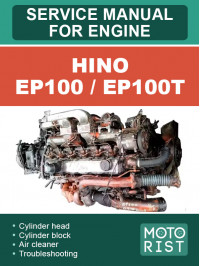
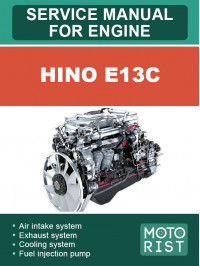
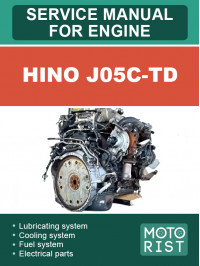
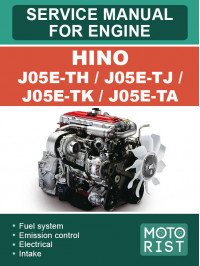
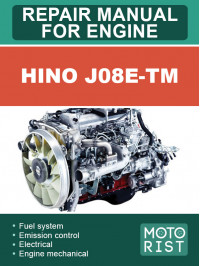
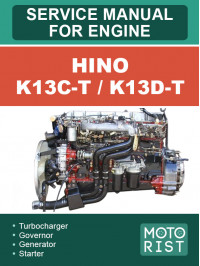
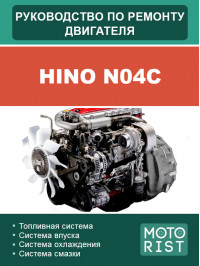
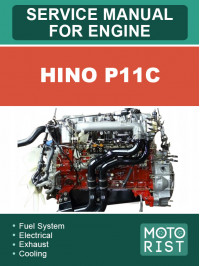
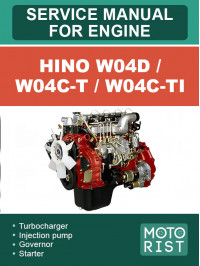
Hino Motors, a company that is part of the Toyota Group, is one of the world’s largest manufacturers of trucks and buses. The foundation of its technology lies in reliable and durable engines that have proven their efficiency under the toughest operating conditions. Hino engines are valued for their endurance, ease of maintenance, and ability to operate under maximum load for hundreds of thousands of kilometers.
The development of Hino engines is a story of continuous pursuit of balance between power, durability, and environmental performance. Today, the company produces a wide range of diesel engines for trucks, buses, and construction equipment, as well as hybrid solutions designed to reduce harmful emissions.
History of Hino Engines
The history of Hino dates back to the 1940s, when the first diesel engine for a truck was created. In the post-war years, the company focused on diesel engines as the most reliable and economical option for heavy-duty vehicles.
In the 1960s–1970s, Hino actively developed a line of six-cylinder diesel engines, which became the standard for medium- and heavy-duty trucks. During this period, the company introduced engine series known for their high maintainability and adaptability to harsh operating conditions.
In the 1990s, Hino made a major leap forward by introducing engines that met modern environmental standards. A key milestone was the collaboration with Toyota, which enabled the adoption of advanced technologies in fuel injection control and emission reduction.
Today, Hino produces electronically controlled engines equipped with Common Rail systems, turbochargers, and intercoolers. At the same time, the company remains true to its philosophy — creating engines that can withstand extreme loads while remaining easy to service.
Main Hino Engine Series
Over the decades, Hino has developed numerous power units that have gained worldwide recognition. Among the most well-known are:
- J-Series — modern four- and six-cylinder diesel engines with Common Rail systems, used in light- and medium-duty trucks.
- K-Series — larger engines for heavy-duty trucks and buses, characterized by high torque.
- E-Series — high-power engines designed for highway tractors and special-purpose machinery.
- W-Series — naturally aspirated and turbocharged diesels widely used in the 1970s–1980s.
- A-Series — compact engines installed in light trucks and buses.
These engines became the foundation of Hino trucks, which have earned a reputation as reliable vehicles for transportation and construction work.
Hino Engine Features
Hino engines possess several key characteristics:
- Durability — engines are designed to cover more than 1,000,000 km with proper maintenance.
- High torque at low RPM — especially important for trucks and buses.
- Ease of maintenance — the design allows for repair using standard service tools.
- Fuel efficiency — modern Common Rail engines demonstrate low fuel consumption.
- Environmental compliance — Hino produces engines that meet Euro-4, Euro-5, and higher standards.
- Versatility — engines are used in trucks, construction machinery, buses, and military vehicles.
These features have made Hino engines the preferred choice of transport companies and government agencies in many countries.
Hino Engine Repair Manuals
Detailed operation and repair manuals for Hino engines are available in PDF format for owners and mechanics. These documents include:
- Complete technical specifications of specific engine models.
- Diagrams of fuel, cooling, and lubrication systems.
- Instructions for replacing belts, filters, and fuel pumps.
- Tables with bolt tightening torques.
- Recommendations for diagnosing electronic systems.
- Descriptions of common malfunctions and repair procedures.
Having such a manual greatly simplifies the repair process and helps extend engine lifespan.
Problems that Hino engine manuals help to solve include:
- Replacement of the high-pressure fuel pump.
- Adjustment of the Common Rail system.
- Troubleshooting turbocharger issues.
- Repairing the cooling system and fixing overheating problems.
- Diagnosing excessive fuel consumption.
- Valve adjustment and cylinder head repair.
- Replacing gaskets and fixing oil leaks.
- Preparing the engine for winter operation.
Hino engines exemplify an engineering approach where reliability and practicality come first. They were built for harsh conditions and can operate where other engines fail.
Using repair manuals in PDF format allows for timely maintenance and enables users to fix most issues on their own. This makes the operation of Hino equipment as convenient and cost-effective as possible, while the engines themselves remain a benchmark in the world of commercial vehicles.