


Information on repair and maintenance of engine SsangYong cars electronically


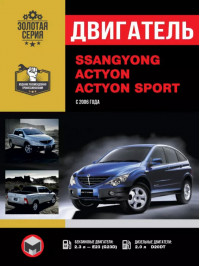
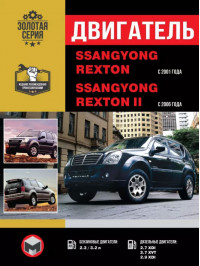
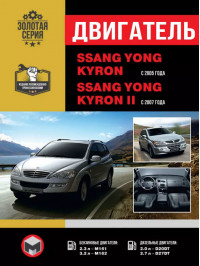
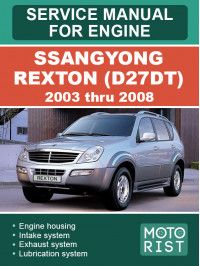

SsangYong vehicles are a symbol of reliability and confidence on the road. Since the early 1980s, the South Korean manufacturer has focused on durable diesel and gasoline engines capable of withstanding heavy loads and adapted to harsh operating conditions. These engines have earned recognition among both private car owners and commercial vehicle operators who value longevity, maintainability, and stable torque.
SsangYong is one of the few brands that has remained loyal to classic diesel engines, continuously improving their design with modern injection, turbocharging, and emission control technologies. Today, the brand’s engines successfully compete with Japanese and German counterparts, offering low operating costs and impressive dependability.
History of SsangYong Engines
The history of SsangYong engines is closely connected to the company’s collaboration with Mercedes-Benz, which began in the 1980s. At that time, SsangYong obtained a license to produce the famous OM601 and OM602 diesel engines, used in models such as the Korando, Musso, and Rexton. These engines were known for their high serviceability, mechanical injection pumps, and durability — easily covering over 500,000 km with proper maintenance.
By the early 2000s, SsangYong began developing its own engines. The first independent series was the XDi, represented by the D20DT, D27DT, and D22DTR models. These diesels featured Common Rail injection, variable geometry turbocharging, and electronic fuel control. As a result, vehicles became more powerful and fuel-efficient while maintaining traditional reliability.
After 2015, the company introduced a new generation of engines — the e-XDi series — featuring an improved Delphi injection system, reduced noise levels, and better fuel efficiency. These engines comply with Euro 5 and Euro 6 standards and are used in models such as the Korando, Rexton G4, Tivoli, and Musso Sports.
Specifications of SsangYong Engines
The SsangYong engine lineup includes both diesel and gasoline units that vary in power, displacement, and application.
- 2.0 e-XDi (D20DT) – an inline 4-cylinder turbo diesel engine with a displacement of 1998 cc, producing 149–181 hp and up to 360 Nm of torque. Installed in the Actyon, Korando, and Kyron models. It features a cast-iron cylinder block and a timing belt drive.
- 2.2 e-XDi (D22DTR) – an upgraded version with an aluminum cylinder head, Delphi CRDi 4.0 system, and Garrett turbocharger. Power: 181 hp, torque: 400 Nm. Used in the Rexton W and Rexton G4.
- 2.7 XDi (D27DT) – the larger version of the diesel, based on the Mercedes OM612. It delivers up to 186 hp and 402 Nm of torque and has an impressive lifespan of over 450,000 km.
- 2.9 TD (OM602) - a classic naturally aspirated or turbocharged diesel from the 1990s, legendary for its reliability. Used in early Musso and Korando models.
- 1.6 e-XDi - a modern engine for the Tivoli and XLV, producing 115 hp and meeting Euro 6d standards.
- 2.0 G20D - a naturally aspirated gasoline engine used in the Korando and Actyon Sport. Displacement: 1999 cc, power: 150-175 hp, designed for 92-octane fuel.
Particular attention should be paid to the D22DTR diesel, considered the perfect balance between power, efficiency, and longevity. It offers low fuel consumption (6.5-7 L/100 km) and high torque, making it an excellent choice for SUVs and pickups.
SsangYong Engine Repair Manual
Comprehensive SsangYong engine repair manuals in PDF format are available for all SsangYong vehicles. These manuals are indispensable for both vehicle owners and service technicians, providing detailed information on:
- wiring diagrams;
- head, injector, and turbocharger removal and installation procedures;
- bolt tightening torques;
- valve clearance adjustments;
- fuel system and EGR testing.
Such manuals are especially useful for diesel engines of the D20DT, D22DTR, and D27DT series, where precise calibration of the Common Rail system and adherence to technical parameters are required.
The main issues that the manual helps to diagnose and fix include:
- Poor starting or rough idle on a cold engine
- Power loss due to clogged EGR or DPF
- Delphi injection system errors (codes P0201-P0204)
- Fuel leakage from injector seals
- Excessive oil consumption
- Timing synchronization issues
- Unstable turbo operation due to actuator wear
Proper maintenance and timely diagnostics are key to the longevity of SsangYong engines. With regular oil and filter changes every 8-10,000 km, XDi and e-XDi engines can last for decades without requiring a major overhaul.
The brand continues to advance diesel technology, combining power, efficiency, and eco-friendliness. The latest generations of SsangYong engines prove that reliability and fuel economy can go hand in hand — and that Korean engineering can compete confidently with the world’s leading automakers.