Information on repair and maintenance of VAZ 2109 cars electronically
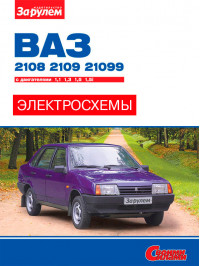
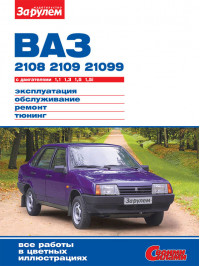
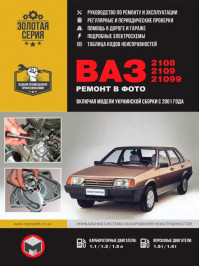
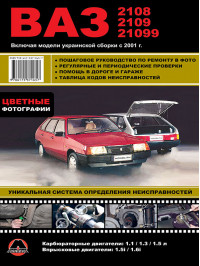
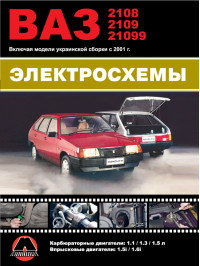
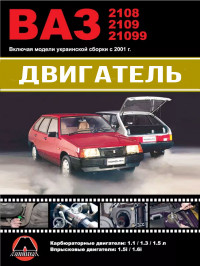
The VAZ 2109 is one of the most popular models of the domestic automotive industry, which since its appearance has become a symbol of an economical and reliable city car. It is a five-door hatchback of the “Samara” family, produced by AvtoVAZ from the late 1980s to the early 2000s.
The model gained wide distribution not only in Russia but also in export markets, where it was valued for its reliability, maintainability, and affordable price.
History of the VAZ 2109
The history of the VAZ 2109 began in the mid-1980s, when AvtoVAZ set the goal of producing a compact five-door front-wheel-drive hatchback. The model was intended to replace outdated rear-wheel-drive cars and reach the level of Western competitors. The development took into account the specifics of Russian roads and climate conditions.
Serial production began in 1987. The VAZ 2109 was based on the “Samara” family platform but had a unique body with a fifth door opening, which made the car more versatile and convenient for everyday use. The designers paid attention to ergonomics, capacity, and safety — a novelty for the Soviet auto industry.
The VAZ 2109 was exported to CIS countries, Eastern Europe, and Latin America, where it became popular thanks to its advantageous price-to-quality ratio. In the mid-1990s, the model underwent several restylings — new bumpers, modernized optics, and an improved interior appeared. In the 2000s, production gradually declined, giving way to new AvtoVAZ models such as the VAZ Priora.
Technical Specifications of the VAZ 2109
The VAZ 2109 was equipped with several gasoline engine options, allowing customers to choose the most suitable variant for their needs and budget. The base engine was the VAZ-2108 with a 1.3-liter displacement and about 64 horsepower — simple to maintain and quite economical. A more common engine was the VAZ-2111, 1.5 liters, 78 hp, with an 8-valve cylinder head and a multipoint fuel injection system, which improved dynamics and reduced consumption.
Also offered was a 1.6-liter 16-valve VAZ-21114 engine producing up to 89 horsepower. This engine provided better performance, improved fuel efficiency, and lower emissions. The transmission was a five-speed manual — reliable and easy to service.
The suspension of the VAZ 2109 followed the classic “Samara” scheme: independent front suspension with MacPherson struts and a semi-independent rear suspension with a torsion beam. This design ensured acceptable comfort and stability on Russian roads. The braking system featured front discs and rear drums, delivering sufficient efficiency.
The five-seat body was designed as a hatchback with a roomy trunk of about 300 liters. High ground clearance of around 160 mm made the car practical for poor road conditions and winter use.
VAZ 2109 Repair and Maintenance Manual
The VAZ 2109 is one of the simplest and most repairable cars of the Soviet and Russian automotive industry. The design of its components and units was engineered to allow owners to perform maintenance and repairs on their own.
Key types of repair and technical maintenance include:
- Timing belt replacement and valve adjustment — essential procedures to extend engine life and prevent serious breakdowns.
- Clutch service — replacement of the disc, pressure plate, and release bearing. These tasks can be done in a garage with minimal expenses.
- Suspension repair — replacement of shock absorbers, springs, ball joints, and bushings. Special attention is given to the rear torsion beam, which requires periodic lubrication and adjustment.
- Braking system — replacement of pads and discs, bleeding of the hydraulic system, and repair of wheel cylinders. Road safety largely depends on the proper condition of the brakes.
- Electrical equipment — inspection of the alternator, starter, battery, and lighting, replacement of fuses, and wiring repairs.
- Cooling system — servicing and replacement of the radiator, thermostat, water pump, and hoses to ensure stable engine operation.
- Bodywork — rust repair, painting, fixing doors, and replacing seals.
A complete VAZ 2109 repair manual contains detailed diagrams and step-by-step instructions that allow quick and efficient repair work. Such materials are available both in print and online.
Today, the VAZ 2109 continues to be actively used in different regions of the country, and thanks to the availability of spare parts and repair knowledge, it remains a simple and convenient car for everyday use. It has become a true classic, a symbol of its era, and an example of a people’s car that won the hearts of millions.
```