


Repair and service Terex agricultural machinery and equipment in the eBook
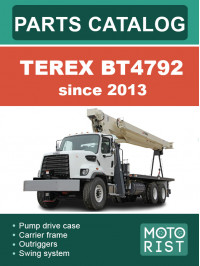
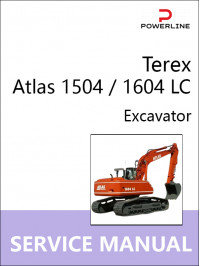
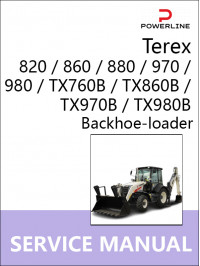
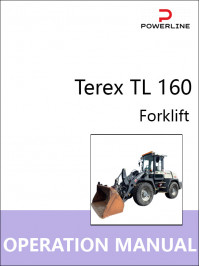
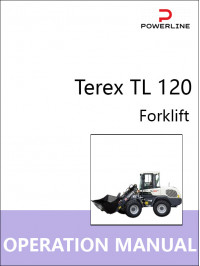
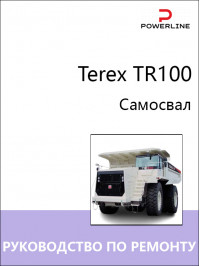
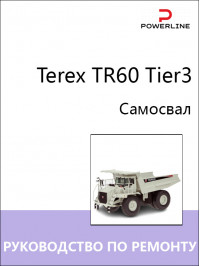
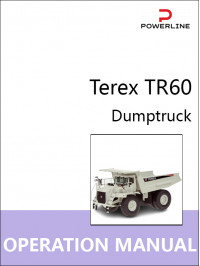
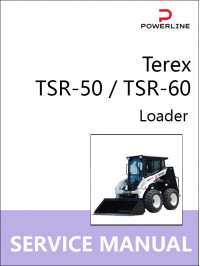
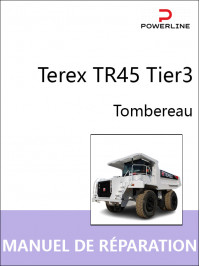
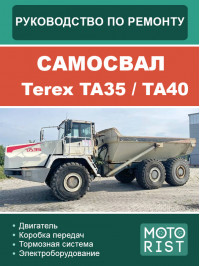
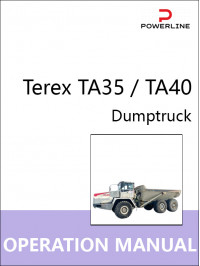
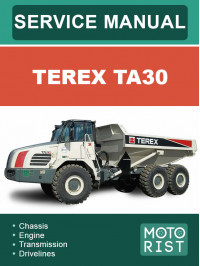
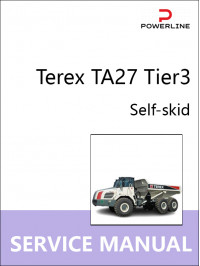
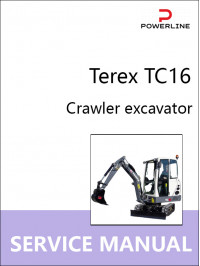
The Terex brand is one of the world's largest manufacturers of construction and quarry equipment. The company's history began in 1933 in the USA with the founding of Euclid Company, which produced quarry dump trucks.
The name comes from the Latin words “Terra” (earth) and “Rex” (king), literally meaning “King of the Earth.”
History of Terex
In 1953, it was acquired by General Motors, and later in the 1970s, the rights to produce heavy equipment were transferred to a new company named Terex.
In the 1990s, Terex began actively acquiring other brands: Powerscreen, Genie, Demag, Fuchs, Pegson, Finlay, and others. This enabled the creation of a wide equipment range—from aerial work platforms and crushing plants to quarry dump trucks and excavators.
In the 2000s, the company became international, opening assembly plants in Europe, China, and Brazil. Today, Terex supplies equipment to over 150 countries and competes with giants like Caterpillar, Volvo CE, and Liebherr.
Terex Equipment Specifications
The Terex product line covers multiple key areas: lifting equipment, construction machinery, material processing equipment, and quarry-specialized machines. The product categories include:
- Front-end loaders and backhoe loaders – used in construction, municipal services, and roadwork. Powered by Cummins or Perkins diesel engines (75–130 hp), Bosch‑Rexroth hydraulics, bucket volumes up to 1.2 m³, and digging depth up to 5.5 m.
- Quarry dump trucks Terex TR60 and TR100 – used in mining. Capable of carrying up to 91 tonnes, driven by a Cummins QSK23 engine up to 1050 hp, with automatic transmissions and reinforced frames.
- Aerial work platforms Genie and tower cranes Demag – popular in logistics and high-rise construction. Feature electro-hydraulic controls, telescopic sections, outriggers, and stabilization systems.
- Crushing and screening plants Finlay, Pegson, and Powerscreen – widely used in material-processing facilities. Available in electric and diesel versions, capable of crushing and sorting inert materials, construction debris, ore, and gravel.
Each Terex machine is designed for heavy-duty conditions, with built-in durability and 24/7 operation capability in harsh environments. Special attention is given to serviceability: easy engine access, removable panels, and uniform mounting points. This is especially valuable for users in CIS countries, where machinery operates under challenging conditions.
Terex Repair Manual
Official PDF manuals for repair, maintenance, and diagnostics are available for most Terex models. These documents are published in English, Russian, and other languages, containing detailed diagrams, instructions, operational recommendations, and troubleshooting guides.
The manuals cover:
- Engine diagrams (Cummins, Perkins, Deutz), including fuel and cooling systems;
- Component specifications, hydraulic and transmission adjustments;
- Fault codes with explanations and repair procedures;
- Maintenance intervals, lubrication diagrams, filter and fluid replacement schedules;
- Electrical and hydraulic schematics and step-by-step checking of actuators.
The content is well-structured by section, enabling quick access to needed information. It includes tables of permissible pressure, levels, and temperatures; torque specs; tool lists; and standard repair times.
The PDF manuals help rapidly and accurately resolve typical Terex equipment issues even with limited service access. For example:
- Engine start problems – fuel system checks, glow plug and starter diagnostics, fixing air leaks.
- Hydraulic failures – distributor adjustments, valve checks, leak fixes, pressure calibration.
- Transmission faults – identifying overheating causes, diagnosing AT, replacing filters and fluids.
- Brake system issues – drum and caliper adjustment, hydraulic cylinder replacement, brake bleeding.
- Electrical malfunctions – fuse and relay inspections, sensor replacement (rpm, pressure, temperature).
Thus, Terex PDF repair manuals are not just technical documents but powerful tools to extend equipment lifespan and reduce service costs—especially critical in remote projects like quarries, mines, bridges, and road construction.