Information on repair and maintenance of Suzuki Swift cars electronically
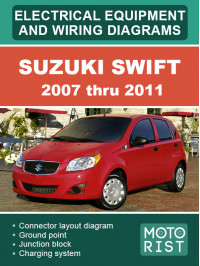
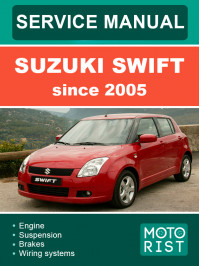
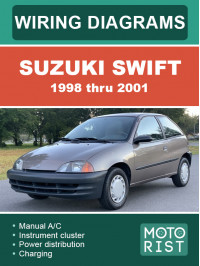
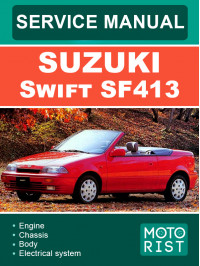
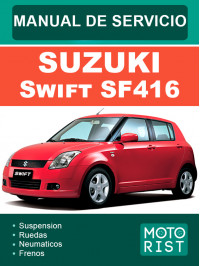
The Suzuki Swift is one of the most popular cars from the Japanese manufacturer Suzuki, which has held a strong position in the global market for over forty years. This compact hatchback has become a symbol of reliability, practicality, and efficiency, making it a top choice for millions of drivers worldwide. In Europe and Asia, the Swift has gained particular affection for its combination of easy handling, high build quality, and modern design.
Suzuki positions the Swift as a versatile city car, equally convenient for beginner drivers, families, and people with an active lifestyle. The model combines low running costs with excellent driving dynamics. Because of this, the Swift is often chosen by those looking for a reliable car with a bright appearance and Japanese build quality.
History of the Suzuki Swift
The first generation of the Suzuki Swift appeared in 1983 and was developed based on the Cultus model. It was available as a sedan, hatchback, and even a convertible. The early versions were equipped with simple and economical G10 and G13 engines, which were easy to repair and extremely durable. These engines helped establish Suzuki’s reputation as a maker of reliable small cars.
The second generation (1988–2001) received a completely new design, improved brakes, and suspension. The car became more stable on the road and got upgraded G13B and G15A engines. This generation was widely exported — sold under the Geo Metro and Chevrolet Sprint names for the U.S. market.
The third generation (2004–2010) became a truly global model. It was designed to meet European standards, featuring a new body and a fully redesigned chassis. The styling became sportier, and the interior more modern and comfortable. For the first time, a Swift Sport version appeared, powered by the 1.6L M16A engine, praised for its excellent weight-to-power ratio.
The fourth generation (2010–2017) featured a new body design, improved handling, and a lighter platform. It introduced fuel-efficient K12B engines and versions with a continuously variable transmission (CVT).
The fifth generation (from 2017 to the present) is built on the new HEARTECT platform, which reduced the car’s weight and improved safety. The Swift is now available with turbocharged K10C BoosterJet engines and hybrid systems. The model became even more advanced, offering adaptive cruise control, automatic emergency braking, and a modern touchscreen infotainment system.
Suzuki Swift Specifications
The Suzuki Swift traditionally comes with a wide range of engines, including both naturally aspirated and turbocharged options. The main concept of the model is a lightweight body, economical engine, and responsive suspension.
- Production years: 1983 – present
- Body types: 3- and 5-door hatchback, sedan (in early versions)
-
Engines:
- 1.0L G10
- 1.3L G13B, M13A
- 1.5L M15A
- 1.6L M16A (Swift Sport)
- 1.2L K12B / K12C Dualjet
- 1.0L K10C BoosterJet (turbo)
- 1.2L DualJet hybrid with ISG (Integrated Starter Generator)
- Transmission: 5-speed manual, 4-speed automatic, or CVT
- Drive type: front-wheel or all-wheel drive (4WD, in some markets)
- Average fuel consumption: 4.5–6.5 L/100 km
- Power output: from 68 to 140 hp
- Top speed: up to 200 km/h (Swift Sport)
The latest generations of the Swift are not only stylish but also safer. The car comes equipped with six airbags, ESP, ABS, and traction control. Despite its compact size, the interior of the Suzuki Swift is spacious and ergonomic, making it comfortable even for long trips.
Suzuki Swift Repair Manual
A detailed Suzuki Swift repair manual is available in PDF format, helping owners perform maintenance and diagnostics on their own. These manuals cover both the early G-series engine models and modern versions with M- and K-series engines.
The manuals include detailed procedures such as:
- checking and replacing oil and filters;
- cooling system maintenance;
- valve and timing belt adjustment;
- replacement of brake pads, clutch, and shock absorbers;
- electronic system diagnostics using an OBD-II scanner;
- wiring diagrams, torque specs, and control parameters.
The availability of diagrams and clear instructions allows even novice owners to safely perform basic repairs, significantly reducing maintenance costs.
Common Suzuki Swift issues:
- Engine mount and suspension bushing wear;
- Injector malfunctions due to poor fuel quality;
- Increased oil consumption in M15A engines after 150,000 km;
- Wiring contact problems in rear light harnesses;
- Ball joint and stabilizer link wear;
- Crankshaft sensor failure (especially in early versions).
The Suzuki Swift perfectly combines Japanese reliability, efficiency, and modern style. Over the decades, the model has evolved from a simple small car into a high-tech hatchback with a hybrid system and electronic driver aids. The Swift is rightfully considered one of the best in its class thanks to its ease of maintenance and long-lasting durability.
The availability of affordable repair manuals and a wide range of spare parts makes the Suzuki Swift an excellent choice for those who want to save on maintenance without sacrificing quality. Regardless of the generation, the Swift remains a car that offers driving pleasure and confidence on the road.