


Information on repair and maintenance of Nissan Micra cars electronically
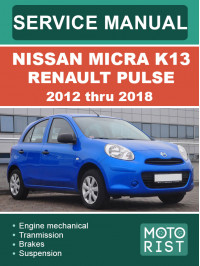
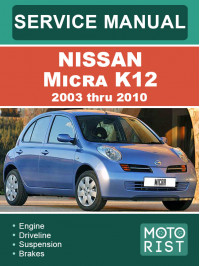
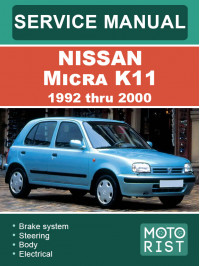
The Nissan Micra is a compact city car developed by the Japanese company Nissan and first introduced in 1982. From the very beginning, the model was created as a response to the growing demand for reliable and economical cars that can easily cope with urban operating conditions.
Initially, the Micra was called the Nissan March and was focused on the domestic market of Japan. Due to its compact size, good fuel economy and ease of maintenance, the model quickly gained recognition. In Europe, the car became known as the Micra and from the first years of sales it gained a foothold in the segment of small city cars.
Characteristics of Nissan Micra
The first generation of the Micra was offered in several body styles, including three- and five-door hatchbacks. Engines with a capacity of 1.0 to 1.3 liters allowed the model to combine excellent fuel economy with sufficient dynamics for the urban cycle.
In 1992, the first generation was replaced by the second generation, which received noticeable changes in appearance and design. The new design, improved suspension, improved comfort in the cabin and the ability to choose between a manual and automatic transmission made the model even more popular. Safety and build quality allowed Micra to take a strong position in its class.
The third generation appeared in 2002 and became an important milestone in the development of the model. The car received a new platform, increased dimensions and an updated appearance. There is more space inside, as well as modern features - electric windows, advanced audio systems and automatic climate control.
In 2010, Nissan introduced the fourth generation, which was distinguished by an even more expressive design, updated electronics and a wide range of options. Against the backdrop of growing competition, Micra remained one of the most reliable and practical solutions in its class.
The modern fifth generation was introduced in 2016. In this version, Nissan Micra acquired a sportier look, improved aerodynamics and an expanded range of engines. Under the hood can be both naturally aspirated and turbocharged engines with a volume of 1.0 to 1.6 liters. Depending on the configuration, the power ranges from 65 to 100 horsepower, and fuel consumption is from 4.8 to 6 liters per 100 km. Thanks to the new chassis, the car demonstrates stable behavior on the road and comfort in motion.
Nissan Micra is equipped with various types of transmissions - from a five-speed manual to a CVT, which allows the driver to choose the most suitable option depending on the driving style. The compact dimensions of the car provide high maneuverability, and the short wheelbase and small turning radius make parking and driving on narrow streets as convenient as possible. Despite the compactness, there is enough space inside for both the driver and passengers, and the trunk offers practical space for everyday needs.
The model also has a high level of safety. The latest trim levels include ABS, EBD, ESP, as well as front and side airbags. Some versions are additionally equipped with rear-view cameras, a lane keeping system, tire pressure sensors and an emergency braking assistant. All this makes the Nissan Micra not only a convenient, but also a safe means of transportation in the city rhythm.
Nissan Micra service manual
For Nissan Micra owners who want to service and repair their car on their own, it is important to have a reliable source of technical information at hand. We offer a convenient solution - a Nissan Micra repair manual in PDF format, which can be downloaded to a smartphone or tablet and used at any time.
This manual will become an indispensable assistant for both novice drivers and experienced motorists. Inside you will find detailed instructions on diagnostics and troubleshooting, as well as step-by-step tips on performing various jobs:
- identifying and solving problems in vehicle systems without unnecessary costs;
- self-repair of the engine with explanations and diagrams;
- simple replacement of oil and fuel filters with your own hands;
- restoration of the brake system, including replacement of pads, in compliance with all safety standards.
The information is presented as clearly as possible, which makes the guide useful even without special training. After purchasing, you get the opportunity to download the book and always have it at hand - on the road, at the dacha or in the garage.