


Information on repair and maintenance of JCB 4CX cars electronically

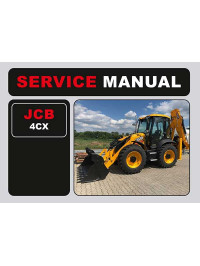


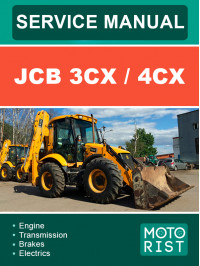




The JCB 4CX backhoe loader has long established itself as a versatile machine capable of working effectively in a wide variety of conditions. It combines the functions of a front loader and an excavator, allowing a wide range of tasks to be performed without the need for additional equipment.
A distinctive feature of this model is its high off-road capability and maneuverability. Three steering modes and all-wheel drive allow confident movement over difficult terrain and in tight construction sites.
History of the JCB 4CX Backhoe Loader
The JCB 4CX backhoe loader is one of the most well-known models from the British company J.C. Bamford Excavators Ltd., founded by Joseph Bamford in 1945. The brand’s history began with simple tipping trailers, but by 1953 the world’s first backhoe loader was created, combining the functions of a front loader and an excavator. This concept proved so successful that it became the global standard for construction machinery.
The JCB 4CX model was introduced in the late 1980s as a senior version of the 3CX, featuring a reinforced design and enhanced performance characteristics. Unlike the smaller model, the 4CX was initially aimed at heavy construction and utility work where maximum productivity and versatility were required. The first years of operation showed that the machine could replace several units of equipment at once, making it a profitable investment for construction companies.
In the 1990s, the manufacturer began actively upgrading the JCB 4CX. More fuel-efficient diesel engines with improved environmental performance were introduced, along with an updated transmission and hydraulic system.
By the 2000s, the machine was equipped with a fully redesigned cab featuring improved soundproofing, air conditioning, and an ergonomic control layout. All this made the JCB 4CX not only productive but also comfortable to operate, which is especially important for operators spending 8–10 hours a day in the cab.
Modern versions of the JCB 4CX are equipped with engines ranging from 100 to 110 hp, compliant with Stage V environmental standards. The machine features all-wheel drive, automatic transmission, a powerful hydraulic system, and multifunctional attachments. This model is widely used in road construction, utilities, agriculture, and mining.
Specifications of the JCB 4CX
One of the key advantages of the JCB 4CX is its high off-road capability. The machine has all-wheel drive and three steering modes: front, rear, and “crab steering,” providing maximum maneuverability. This is especially important in confined construction sites where precise machine movement is required.
The excavator section allows digging to a depth of up to 6 meters, while the front bucket holds up to 1.3 m³ of material. The loader’s lifting capacity reaches 4.5 tons, making the JCB 4CX efficient for loading bulk materials, soil, gravel, or construction debris.
The hydraulic system ensures high speed and precision of operation. The quick-change attachment system allows the machine to be adapted for specific tasks such as drilling, grading, demolition, or pallet handling.
The operator’s cab of the JCB 4CX features a spacious interior, panoramic glazing, climate control, a cushioned seat, and a modern digital display. Machine controls are intuitive, reducing operator training time and increasing productivity.
Repair of the JCB 4CX Backhoe Loader
Despite its high reliability, the JCB 4CX requires regular maintenance. Scheduled servicing includes changing engine and hydraulic oils, filters, checking tire condition, and diagnosing the braking and undercarriage systems. It is especially important to monitor the condition of hydraulic hoses, as leaks can reduce performance and cause equipment failures.
In case of repairs, owners and mechanics use the JCB 4CX repair manual in PDF. This document contains detailed diagrams of assemblies and components, disassembly and assembly instructions, wiring diagrams, parameter tables, and troubleshooting recommendations.
With the help of this manual, one can independently or at a service center eliminate such issues as:
- Failure or wear of the hydraulic pump
- Hydraulic fluid leaks
- Malfunctions in the braking system
- Engine overheating
- Electrical wiring and sensor failures
Regular use of genuine spare parts and preventive inspections extend the machine’s service life and help avoid costly repairs. Thanks to its combination of high performance, comfort, and maintainability, the JCB 4CX remains one of the most in-demand models in its class.