


Information on repair and maintenance of Iveco engines cars electronically
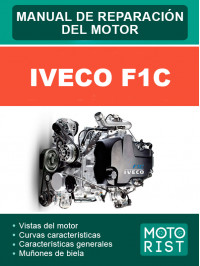
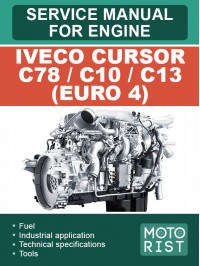
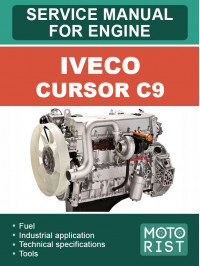
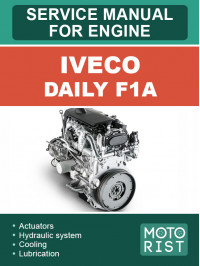
Iveco engines combine European engineering, high durability, and fuel efficiency proven over decades of commercial vehicle use. The Italian brand Iveco (Industrial Vehicles Corporation) was founded from the outset as a manufacturer of heavy-duty and medium-duty trucks, so its engines were designed from the ground up for reliable and long-lasting service.
Today, Iveco engines are used not only in Daily, Eurocargo, and Trakker trucks, but also in buses, construction equipment, diesel generators, and even boats. The main advantage of these engines is their service life, which, with proper maintenance, can reach up to 1,000,000 km without major repairs.
History of Iveco Engines
The history of Iveco engines begins in 1975, when the Iveco concern was formed through the merger of Fiat Veicoli Industriali, OM, Lancia Veicoli Speciali, Unic, and Magirus-Deutz. By the 1980s, the company had developed a line of turbocharged diesel engines that quickly gained recognition in the European market.
One of the first mass-produced engines was the Iveco 8140 – an inline four-cylinder diesel engine installed in the first generations of the Iveco Daily. It was easy to maintain, had a cast-iron block, and a Bosch mechanical fuel injection pump. Later, improved versions with a turbocharger and intercooler appeared.
In the 1990s, the company introduced the Sofim series (Società Franco Italiana Motori), developed jointly with Fiat and Renault. These engines were distinguished by their compactness, reliability, and low fuel consumption. Sofim engines were installed in the Fiat Ducato, Renault Master, Iveco Daily, and many other models.
By the 2000s, Iveco completely updated its powertrain lineup, introducing Common Rail technology and electronic fuel system management. The new F1A, F1C, Cursor, and Tector series have become the benchmark for medium and heavy-duty diesel engines.
Iveco Engine Specifications
Modern Iveco engines range from lightweight 2.3-liter diesels to powerful 13-liter units for long-haul trucks.
The most common series are:
- F1A (2.3 L) – a diesel engine with outputs ranging from 96 to 156 hp, used in the Iveco Daily since 2006. Equipped with a common rail system, variable geometry turbocharging, and EGR. It boasts low fuel consumption – around 8 l/100 km.
- F1C (3.0 l) – turbodiesel with 146–210 hp, installed in the Daily and Eurocargo. It is known for its high torque (up to 470 Nm) and reliability under heavy loads.
- Tector (4.5 – 6.7 l) – six-cylinder series for Eurocargo trucks. It has a power output of up to 320 hp, Bosch injection system, and electronic control.
- Cursor (8.7 – 13 l) – engines for heavy-duty Trakker and Stralis trucks. They produce up to 570 hp and comply with Euro VI standards. The design utilizes variable-geometry turbocharging, an SCR system, and cooled EGR.
All Iveco engines are designed with a focus on efficiency and maintainability. The use of durable materials and a well-thought-out layout make them easy to service, even in the field.
Iveco Engine Repair Manual
Official Iveco engine repair manuals are available in PDF format for all engine models. These manuals contain not only step-by-step instructions but also electrical diagrams, tightening torques, and diagnostic troubleshooting tables.
The manual describes in detail the procedures for checking compression, adjusting valves, and removing the turbocharger and fuel injection system. The documents cover both older mechanical diesel engines (8140) and modern electronic Common Rail systems (F1A/F1C).
Iveco manuals offer solutions to the following problems:
- Power loss and increased fuel consumption
- Pressure and temperature sensor errors
- Unstable idle speed
- Oil or coolant leaks
- Difficulty starting the engine at low temperatures
- Fuel injection pump and injector wear
- Turbocharger diagnostics and replacement
Iveco engines are rightfully considered among the most reliable diesel units in their class. They are designed for intensive use and long-term operation without major repairs. At the same time, the availability of parts and detailed service manuals make maintenance extremely simple.
Modern Iveco engines comply with Euro VI emissions standards, are equipped with electronic control systems, and are also adapted to run on biodiesel. All this makes the Iveco brand a symbol of reliability, efficiency, and innovation in diesel technology.