


Information on repair and maintenance of Isuzu motors cars electronically
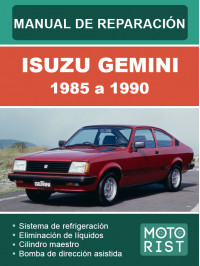
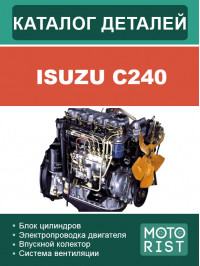
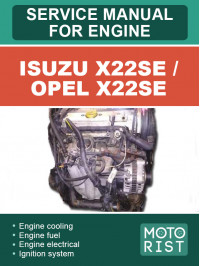
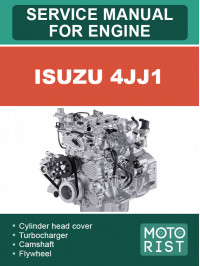
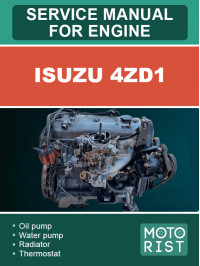
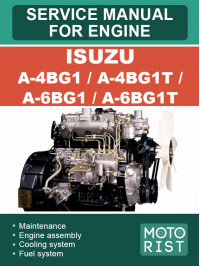
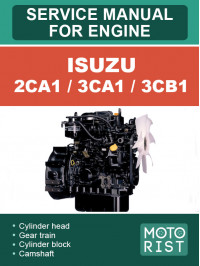
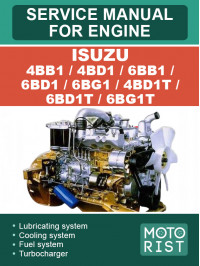
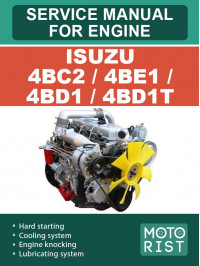
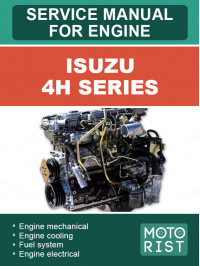
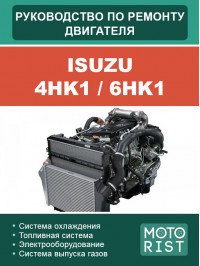
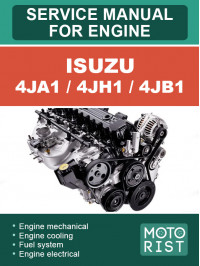
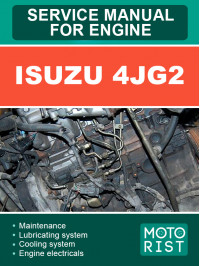
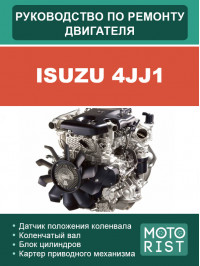
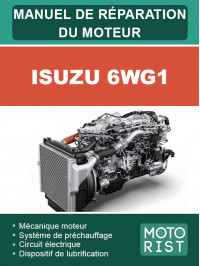
Isuzu engines are rightfully considered among the most reliable and durable in their category. The Japanese company Isuzu specializes in the development of diesel power units for commercial and industrial vehicles, as well as for SUVs and pickups.
Special attention is given to fuel efficiency, engine longevity, and adaptability to various operating conditions — from urban routes to challenging off-road environments.
History of Isuzu Engines
The history of Isuzu engine manufacturing began in 1918, when the company released the first Japanese truck with a diesel engine, designed for heavy-duty operations.
During the 1930s–1940s, engineers improved the designs, creating reliable power units for commercial vehicles and special equipment. After World War II, Isuzu focused on developing compact engines, which secured its leadership in the light and medium-duty truck segment.
By the 1960s–1970s, the first series of 4AG1 and 4BA1 diesel engines with aluminum cylinder heads and mechanical injection systems appeared. They were known for their ease of maintenance and high serviceability. In the 1980s–1990s, the lineup expanded with naturally aspirated and turbocharged 4BD1 and 6BG1 engines, widely used in buses, bulldozers, and mining equipment.
Since the early 2000s, Isuzu has been implementing modern common rail technologies and electronic injection control. The 4JJ1 and 6HK1 series were introduced, featuring VGS turbochargers and meeting Euro 4–6 emission standards. The company also established partnerships with General Motors and Toyota, adapting engines for foreign models and expanding the range of modifications.
Technical Specifications of Isuzu Engines
Isuzu diesel engines stand out for their reliability and long service life due to efficient fuel injection and cooling systems. The 4BD1 series (3.9 L) delivers 85–100 hp at 3500 rpm and 220–245 Nm at 2000 rpm, with a fuel consumption of 8–10 L/100 km; it was used in ELF trucks and buses.
The 4BA1 (4.3 L) produces 100–120 hp and up to 300 Nm, is equipped with a turbocharger and intercooler, and was installed in the Isuzu Bighorn and special equipment.
The modern 4JJ1 series (3.0 L) with common rail and VGS provides 130–190 hp and up to 410 Nm, complies with Euro 5–6 standards, and is used in the D‑Max and MU‑X models.
The 6HK1 (7.8 L) is a heavy-duty diesel engine for F‑Series trucks and buses, producing 240–360 hp and 950–1250 Nm, combining reliability and performance under high loads.
Most series feature aluminum cylinder heads, cast-iron engine blocks, chain-driven timing systems, electronic fuel injection, and ECU-based fuel mapping.
Repair and Maintenance Manual for Isuzu Engines
The official Isuzu repair manual in PDF format includes detailed diagrams and schematics of key components:
- cylinder-piston group,
- cylinder head, crankshaft,
- timing system,
- common rail fuel system,
- boost system.
The manual provides step-by-step instructions for disassembling and assembling the cylinder head, checking valve clearances, measuring compression, and adjusting injector pressure.
Torque specs, clearance values, and operation sequences are specified for individual models with precision.
The fuel system section explains the operation of the high-pressure fuel pump, rail pressure adjustment sequence, injector calibration, and ECU adaptation procedures.
Wiring diagrams cover the connection of pressure, temperature, crankshaft, and camshaft sensors, as well as self-diagnostic algorithms and OBD‑II/CAN protocols. Tables of normal oil and fuel pressures and temperature tolerances ensure diagnostic accuracy.
The final chapters cover break-in procedures after engine overhaul, oil selection (10W‑30, 15W‑40), coolants, and original part numbers for gaskets, filters, piston rings, bearings, and sealing elements.
The PDF manual helps solve the following issues:
- Engine overheating and unstable temperature under maximum load
- Increased fuel and oil consumption due to piston group wear
- Valve knocking and incorrect timing phase operation
- Leaks in the injection system, injectors, and common rail fittings
- Compression loss due to cylinder and piston ring wear
- ECU self-diagnosis errors and faulty sensor codes (MAP, MAF, EGT)
- Turbocharger VGS misadjustment and power loss
- Timing chain tensioner wear and lubrication system issues
- Fuel filter clogging and pressure drop in the fuel line
- Incorrect ECU adaptation after injection system component replacement
Using this manual ensures compliance with factory procedures and technical tolerances. Even with minimal mechanic experience, the detailed diagrams and precise instructions allow for high-quality engine restoration in the shortest possible time.
The official PDF manual not only helps fix current issues but also supports preventive maintenance, reducing the risk of common failures. This makes the operation of Isuzu diesel engines as reliable and efficient as possible.