


Information on repair and maintenance of Hyundai Terracan cars electronically
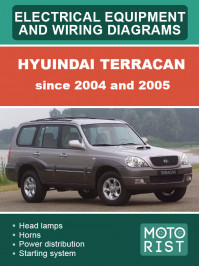
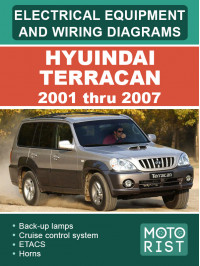
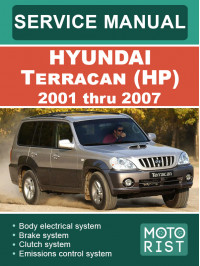
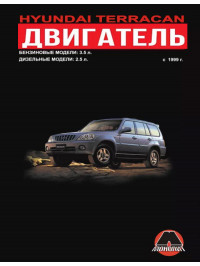
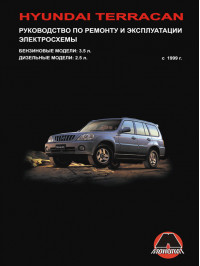
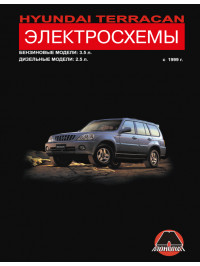
Hyundai Terracan is an all-terrain vehicle produced by the Hyundai car manufacturer from 2001 to 2006. It was developed by Hyundai on the basis of the Mitsubishi Pajero (V20) as a medium-sized five-door SUV and became the successor to the three-door Hyundai Galloper, which was still based on the Mitsubishi Pajero (L040).
At the very beginning of the 21st century, Hyundai needed a roomy but economical SUV that would be an inexpensive alternative to the 2000 Mitsubishi Pajero and could directly compete with the Toyota LandCruiser and Nissan Terrano.
Features of Hyundai Terracan
Knowing little about developing a 4x4 from scratch, Hyundai decided that it could take apart the Galloper chassis and give it a new body. They also replaced the engines and improved the transmission, but mostly it was a more or less refreshed Mitsubishi Pajero / Montero. Fortunately, this chassis was excellent for its time and continues to be very good even two decades later.
Korean designers tried to hide the connection with the Japanese model by introducing smoother lines and softened edges. Along with the facelift, the Terracan received rectangular fog lights instead of the previously offered round ones. At the back, Hyundai presented a new design of rear lights.
In Europe, the available engine was a 2.9-liter in-line four-cylinder diesel engine with Common Rail injection, which was installed longitudinally at the front and came from the Kia Carnival. Before restyling in 2004, it had a power of 110 kW (150 hp), and then 120 kW (163 hp). Other markets also offered a 2.5-liter D4BH diesel engine without the Common Rail system and a 143 kW (194 hp) 3.5-liter V6 (G6AU) gasoline engine. Both are modified license assemblies of Mitsubishi engines.
Inside, the Hyundai Terracan has already been recognized as a spacious vehicle, mainly for four passengers. Its huge trunk could be easily accessed from behind through the wide rear door or inside the car thanks to the 60/40 split-folding rear seat.
In 2005, Hyundai Terracan underwent restyling, improved its safety, equipment, quality, consumption and advantages. The Korean SUV had a front end very similar to the front end of its predecessor. Only the front grille has changed, which abandons its previous design and has a honeycomb structure in the center of which the brand logo is located, a bumper with a larger front air intake and fog lights improve the lighting range.
From the side, the main differences were side moldings, six-spoke light-alloy wheels and enlarged side steps. In the rear part, the transformation was reduced to reworked optics and a neater bumper, into which taller side lights were integrated to avoid typical breakdowns that occur in parking lots.
Literature on the repair of Hyundai Terracan
Repair or diagnosis of malfunctions is a fairly relevant and open question for the Hyundai Terracan SUV. Such actions require timely and high-quality repair service. Diagnostics, technical maintenance, and especially the replacement of parts requires certain knowledge and understanding from us. In the car repair manual you will find answers to such questions:
- how to replace oil and cabin filters;
- how to find a malfunction of the engine's electrical equipment and eliminate it;
- what are the main malfunctions of the engine;
- how to properly repair the gearbox, etc.
Hyundai Terracan repair book in PDF format will be useful to everyone. The manual describes in detail the design of the car, the main characteristics, illustrations with a detailed description for various repair works. The information is accessible and understandable to everyone, presented as simply as possible and based on the experience of professionals over many years. You can download the book to your phone or tablet and always have it at hand.