


Information on repair and maintenance of engine Volvo cars electronically



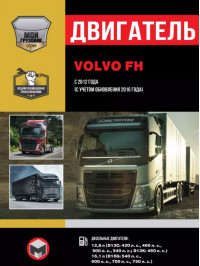


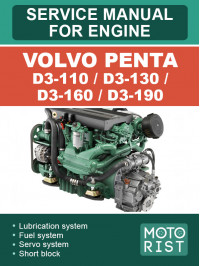
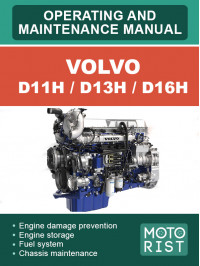
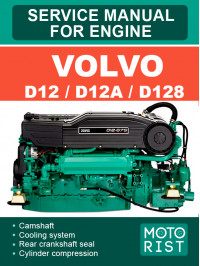
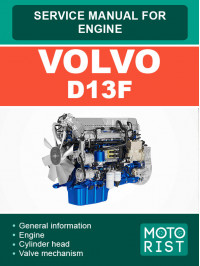
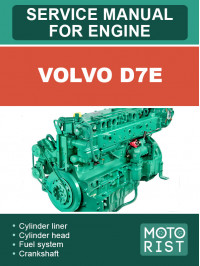
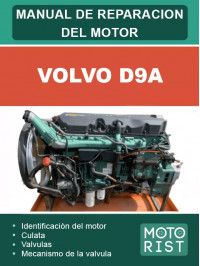
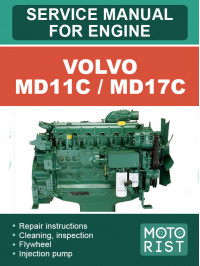
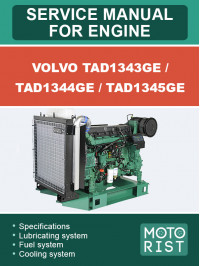
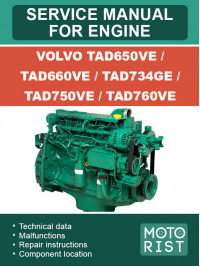
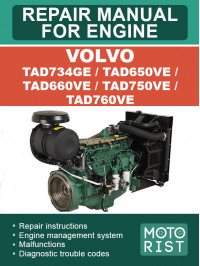
Volvo engines have a well-deserved reputation for reliability, durability and high efficiency in cars, construction equipment, trucks and generator sets.
For more than a century, the Swedish company Volvo has repeatedly proven its ability to create engines that operate in the harshest climatic and operating conditions - from arctic latitudes to deserts.
History of Volvo engines
Volvo was founded in 1927 in Gothenburg, Sweden, as a manufacturer of passenger cars, with an emphasis on safety, reliability and technical precision from the very beginning. Already in the 1930s, the company began to develop its own gasoline and diesel engines, and since the 1950s, it has been actively introducing them into trucks, buses and construction equipment.
Since the 1970s, Volvo has become one of the leading manufacturers of commercial engines in Europe. At this time, the first large diesel engines of the TD, TAD series were released, and then the D-series, designed for construction equipment, stationary installations and ships. Since the 1990s, Volvo has been actively developing the Volvo Trucks, Volvo Penta and Volvo CE (Construction Equipment) lines, each of which uses its own engine modifications.
In the 2000s, the company focused on reducing emissions and improving fuel efficiency, producing engines that meet the strict environmental standards Euro 3-6, Stage IV and Tier 4 Final. Today, Volvo is synonymous with environmentally friendly diesel engines with a long service life and intelligent control system.
Technical characteristics of Volvo engines
Volvo engines are divided into several lines depending on the area of application. Below are the key features and examples of models used in different industries.
1. Construction equipment (Volvo CE):
- Volvo D6J, year of manufacture: since 2014, power: up to 175 hp.
- Volvo D8H, year of manufacture: since 2016, power: up to 330 hp.
- Volvo D13J, year of manufacture: since 2018, power: up to 500 hp.
These engines are installed on excavators, loaders, graders and quarry trucks. They have a turbocharger with intermediate cooling, a Common Rail injection system and comply with Stage V standards. They are characterized by low fuel consumption, high torque and easy access to components for maintenance.
2. Trucks and buses (Volvo Trucks):
- Volvo D11K, year of manufacture: since 2013, power: 330–450 hp.
- Volvo D13K, year of manufacture: since 2014, power: up to 540 hp.
- Volvo D16K, year of manufacture: since 2016, power: up to 750 hp.
These are 6-cylinder in-line engines with a high compression ratio, fuel injection under pressure of more than 2000 bar and intelligent emission control. They are used in long-haul trucks and long-distance buses.
3. Stationary and marine engines (Volvo Penta):
- Volvo TAD1643VE, year of manufacture: since 2009, power: 700 hp
- Volvo D7E, year of manufacture: since 2012, power: 280–320 hp
- Volvo D16 MH, year of manufacture: since 2015, power: 750 hp
These motors provide stable operation under long-term loads. They are used in generators, pumping stations, ships and cranes. Particular attention is paid to reliability and the ability to operate in continuous mode.
Volvo engine technologies
Volvo is actively introducing innovations in engine manufacturing:
- VEB+ (Volvo Engine Brake Plus) — an electronically controlled engine brake.
- EMS (Engine Management System) — an engine management system that optimizes fuel consumption and emissions.
- SCR (selective catalytic reduction) — reducing nitrogen oxides due to AdBlue injection.
- DPF (diesel particulate filter) — removing soot particles from exhaust gases.
- EGR (exhaust gas recirculation) — reducing combustion temperature and NOx levels.
Volvo engine repair manual
For all Volvo engine lines Official repair and maintenance manuals are published in PDF format for service centers, mechanics, and equipment owners. These documents include:
Typical problems that can be solved using the manual:
- Increased fuel consumption due to a faulty fuel pressure sensor
- Overheating due to a clogged intercooler or thermostat
- Unstable idling due to clogged injectors
- Oil leak from the turbo or valve cover
- EGR or DPF errors causing a drop in power
- Problems starting at low temperatures
PDF manuals help diagnose and fix problems in a timely manner, increasing engine service life and reducing repair costs.
Volvo engines are the result of decades of research, testing and innovation. Regardless of whether the engine is used in a truck, excavator or generator set, it provides stable operation, economy and compliance with modern environmental requirements.
The availability of detailed PDF repair manuals for Volvo engines and a wide service network make service and repair as accessible as possible. The Volvo engine is the reliable heart of any equipment.