


Information on repair and maintenance of engine Suzuki cars electronically



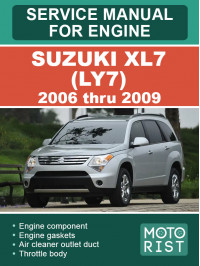

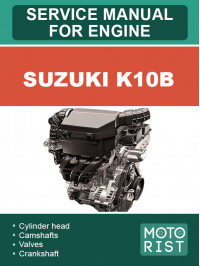
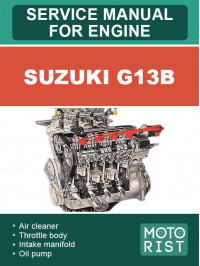
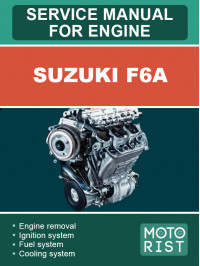
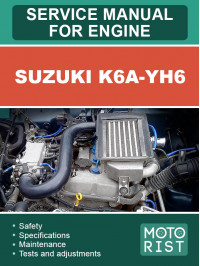
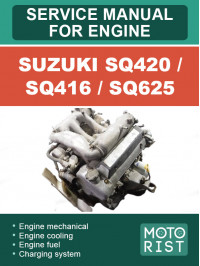
Suzuki is known worldwide as a manufacturer of compact and reliable cars, motorcycles, and SUVs. One of the brand’s main advantages has always been its engines. They were distinguished by simple design, fuel efficiency, and high reliability, which made Suzuki cars popular both in urban environments and off-road.
Suzuki engines were created according to the brand’s philosophy: lightweight, compact, and practical. Over the decades, the company has developed many engine series – from small three-cylinder units for kei cars to powerful turbocharged systems for sports models.
History of Suzuki Engines
The first Suzuki car engines appeared in the mid-20th century, when the company began producing compact cars for the domestic Japanese market.
In the 1960s, small-displacement engines were developed for microcars and SUVs, among which the LJ10 with a two-stroke engine stood out. It became the foundation of future Jimny models.
In the 1970s–1980s, Suzuki actively developed four-stroke engines. The first G and F series appeared, combining simplicity and high reliability. These engines were installed in the Swift, Cultus, Alto, and other popular models.
In the 1990s, the company made a major step forward by introducing more advanced units with multi-point fuel injection, improved efficiency, and reduced emissions. The M series and its later versions became widely used in city cars.
The modern stage of Suzuki engine development is associated with the K and R series, which are compact, fuel-efficient, and meet strict environmental standards. The company is also implementing turbocharging and hybrid technologies.
Main Suzuki Engine Series
- F-series – the first four-cylinder engines for compact cars. Simple and durable.
- G-series – popular naturally aspirated engines of the 1980s–1990s, widely used in the Swift, Vitara, and Cultus.
- M-series – engines with multi-point injection, improved efficiency, and high durability. Used in the Liana, Aerio, and other models.
- K-series – modern compact engines with an aluminum block, offering a good balance of power and efficiency. Used in the Swift, Wagon R, and Baleno.
- R-series – small-displacement engines for kei cars, noted for high fuel efficiency.
- J-series – more powerful engines used in Grand Vitara SUVs.
Each series was developed with its application in mind, whether for a city microcar or an off-road vehicle for tough conditions.
Features of Suzuki Engines
Suzuki engines share several common features:
- Compact and lightweight – most engines are designed for small cars.
- Fuel efficiency – even older engines are known for low fuel consumption.
- Long service life – with timely maintenance, engines can run 300,000–400,000 km.
- Ease of repair – most units are easy to service even in a regular workshop.
- Adaptation to small displacement – Suzuki is one of the leaders in creating engines under 1.5 liters.
- Modern technologies – new series are equipped with VVT (variable valve timing), turbocharging, and hybrid solutions.
These qualities make Suzuki engines ideal for city driving and short trips, as well as reliable companions in small SUVs.
Suzuki Engine Repair Manuals
Repair and maintenance manuals in PDF format are available for most Suzuki engine models. They contain detailed information:
- Technical specifications of the engines.
- Diagrams of unit and component locations.
- Bolt tightening torque tables.
- Instructions for replacing the timing belt, spark plugs, and filters.
- Diagnostics of the fuel and ignition systems.
- Valve clearance adjustment recommendations.
- Tips for preparing the engine for winter use.
Such materials allow owners and mechanics to perform high-quality repairs and maintenance without unnecessary mistakes.
What problems Suzuki engine repair manuals help solve:
- Replacement of timing belt or chain.
- Cooling system repairs and overheating elimination.
- Fuel injection troubleshooting.
- Starting issues.
- Increased fuel consumption.
- Gasket replacement and oil leak elimination.
- Valve adjustment.
- VVT system adjustment.
Having a PDF repair manual makes operation even more convenient: the owner gets access to maintenance information and can fix many issues independently.
Thanks to their simplicity and durability, Suzuki engines remain popular, and the brand’s cars are deservedly considered among the most reliable in their class.