Information on repair and maintenance of engine Iveco cars electronically
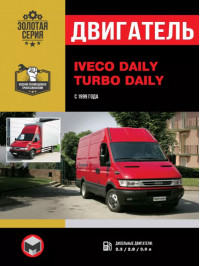
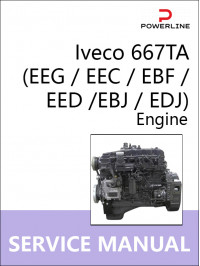
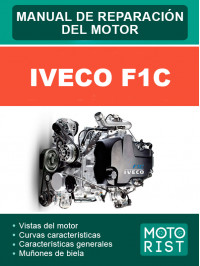
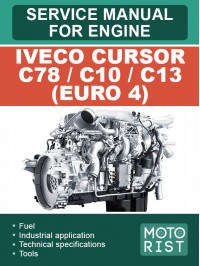
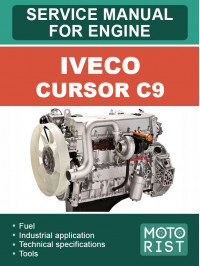
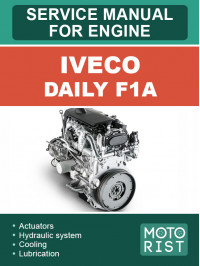
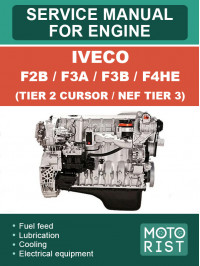
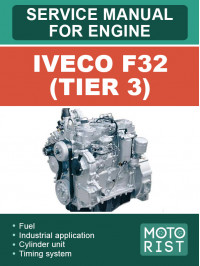
The Iveco company (Industrial Vehicles Corporation) was founded in 1975 as a result of the merger of five manufacturers from Italy, Germany and France: Fiat Veicoli Industriali, OM, Lancia Veicoli Speciali, Unic and Magirus-Deutz.
It was this alliance that marked the beginning of the creation of its own engine manufacturing under the Iveco brand. Already in the 1980s, the concern began serial production of diesel engines for light and medium-duty trucks, as well as buses and construction equipment.
For a long time, Iveco used the developments of FIAT Powertrain Technologies, but gradually the engines began to receive a unique design focused on economical operation under high loads. By the early 2000s, the company's engineers had completely updated the line, introducing Cursor engines, which became the brand's calling card. Turbocharged versions, Common Rail systems and electronic controls appeared, adapted to environmental standards Euro 3, 4, 5 and 6.
Today, Iveco is part of CNH Industrial and offers engines that are used not only in trucks and buses, but also in agricultural machinery, tractors and generators. Iveco engine production plants are located in Italy, France, Spain, Turkey, China and Argentina, which ensures global presence and service.
Iveco engine range
Iveco engines are distinguished by their endurance, long service life and adaptability to severe operating conditions. Most modern models run on diesel fuel and are built on a modular design with a cast-iron cylinder block, forged steel crankshafts, electronic injection control and variable geometry turbocharging.
The most common Iveco engine series:
- F1A and F1C are light and medium diesel engines with a volume of 2.3 to 3.0 liters, used in the Iveco Daily, produced from 1999 to the present.
- Sofim 8140 is one of the most popular diesel engines, installed on the Daily, Fiat Ducato and Citroën C25 in the 1980s–2000s.
- NEF is a family of universal engines for trucks, tractors and generators, includes 4- and 6-cylinder versions.
- Tector — installed on EuroCargo and bus equipment, works with EGR and SCR systems.
- Cursor 8 / Cursor 9 / Cursor 11 / Cursor 13 — powerful turbodiesels for Stralis and Trakker trucks, characterized by high torque and a service life of over 1 million km.
- CNG versions of Cursor and NEF engines — running on compressed natural gas (methane), used in city buses and environmentally friendly Iveco trucks.
Iveco engines use Bosch or Delphi Common Rail fuel systems, electronically controlled turbochargers, oil heat exchangers, modular control units (ECU), as well as advanced exhaust cleaning technologies, including catalysts SCR, particulate filters and EGR system with cooling.
Repairability and availability of spare parts make these engines especially attractive for commercial vehicles. For example, F1C can go up to 500-600 thousand km with regular oil changes, and Cursor 13 - more than a million km if maintenance regulations are observed. At the same time, most engines are adapted to low-quality fuel and overloads, which makes them in demand in Eastern Europe, Asia and Latin America.
Iveco Engine Repair Manuals
Original PDF repair manuals for Iveco engines are available for all popular series and are widely used both at service stations and by private mechanics. These documents contain technical data, diagrams, instructions for adjustments and diagnostics, which makes them indispensable in the restoration and maintenance of engines.
A typical manual includes:
- torque characteristics, clearances, pressures;
- sequence of disassembly / assembly of the cylinder block and head;
- power supply and ECU connection diagrams;
- error tables with decoding of fault codes;
- instructions for installing valve timing and belt tension;
- methods for testing injectors, fuel injection pumps and turbochargers;
- recommendations for calibration and adaptation after repair.
These materials are especially useful for diagnosing EGR, SCR and injection control systems, which often cause errors when the unit is incorrectly flashed or using unsuitable fuel. PDF manuals are often supplemented with connector diagrams, hydraulic and pneumatic diagrams for Cursor and Tector, description of Service Tool software and ECU parameters.
Thanks to these documents, specialists can accurately determine the cause of the malfunction, avoid repeated breakdowns after assembly and carry out scheduled maintenance in full. This is especially important for Cursor 9 and 13, where the slightest mistake during repair can lead to failure of the entire boost system or fuel rail.