Electrical wiring Ford Focus in electronic form




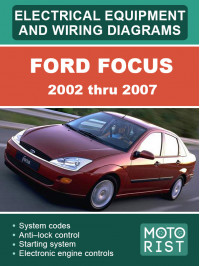


The electrical diagrams of the Ford Focus play a key role in ensuring the correct operation of all vehicle systems—from the engine and transmission to comfort, safety, and multimedia. Proper functioning of the electronics directly affects engine stability, the ABS system, airbags, lighting, and climate control. Understanding the structure of the wiring diagrams and how they work makes it possible to detect faults in time and prevent serious breakdowns, preserving the vehicle’s service life and reducing repair costs.
The Ford Focus is known for its reliability and durability, and the electrical diagrams are an important part of this reputation. Modern models are equipped with complex systems, including electronic engine management, multimedia, stability control, parking sensors, and adaptive lighting. Owners and technicians who understand the wiring layout can quickly diagnose issues, eliminate short circuits, and restore system functionality without costly replacements.
History of Ford Focus Electrical Systems
The first generation of the Ford Focus was introduced in 1998 and was equipped with 1.4–2.0 Duratec gasoline engines and 1.8 TDCi diesel engines. The electrical diagrams of early models were relatively simple but already included an engine control unit (ECU), ABS, and basic lighting and instrument panel functions.
The second generation (2004–2011) received more complex electronic systems: stability control, tire pressure monitoring sensors, an expanded engine control unit, and multimedia systems. Gasoline models used 1.4, 1.6, 1.8, and 2.0 Duratec engines, while diesel versions used 1.6 TDCi and 1.8 TDCi engines. The electrical diagrams of the second generation include integration of engine management with transmission and safety systems, making diagnostics more complex.
The third generation of the Ford Focus (2011–2018) introduced modern electronic control systems, including adaptive cruise control, touchscreen multimedia units, and electronic driver assistance systems. During this period, 1.0 EcoBoost, 1.6 Ti-VCT, and 2.0 EcoBoost engines appeared, and the wiring diagrams ensured control of all vehicle systems through a single ECU integrated with ABS, ESC, and parking assistance systems.
The current generation of the Focus (2018–2025) features fully digital electrical diagrams with a large number of sensors and electronic modules that control the engine, transmission, safety systems, climate control, and multimedia. Gasoline engines include the 1.0 EcoBoost and 1.5 EcoBoost, while diesel engines include the 1.5 TDCi and 2.0 TDCi. This makes knowledge of the electrical diagrams critically important for proper diagnostics and repair.
Characteristics of Ford Focus Electrical Systems
The electrical diagrams of the Ford Focus ensure reliable operation of all vehicle systems. Key characteristics include:
- Engine control unit (ECU) for gasoline and diesel engines.
- ABS, ESC, and traction control systems connected to wheel sensors.
- Electric drives for power windows, mirrors, and door locks.
- Multimedia systems, touch panels, and navigation units.
- Airbag system and seat belt pretensioners.
- OBD-II diagnostic connectors for reading fault codes and system testing.
- Wiring protection against moisture, overheating, and mechanical damage.
The Focus wiring diagrams ensure stable operation of the engine, transmission, and safety systems, simplify diagnostics, and allow for preventive maintenance.
Repair of Electrical Systems and Ford Focus Wiring Diagrams
Having Ford Focus wiring diagrams in PDF format on hand is essential for vehicle owners and service technicians. They include detailed connection diagrams, instructions for voltage checks, and diagnostics of connectors and electronic control units.
Using the manual, you can:
- check and restore ECU operation;
- diagnose and repair faults in ABS, ESC, and airbag systems;
- repair electric drives of power windows, mirrors, and locks;
- service multimedia and navigation systems;
- check engine and transmission wiring;
- eliminate short circuits and damaged connectors;
- use diagnostic tools to read fault codes and calibrate components;
- prevent malfunctions in the vehicle’s electronic systems.
Proper use of the manual allows you to keep the Ford Focus in excellent condition, extend the service life of the engine and electronics, ensure safe operation, and prevent costly breakdowns. Wiring diagrams are the foundation of the Focus’s reliability, safety, and comfort, and the repair manual guarantees accurate diagnostics and restoration of all vehicle systems.