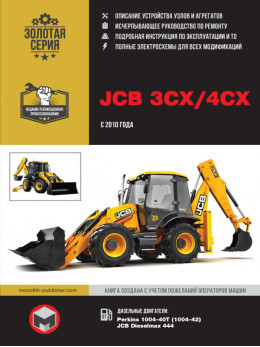
Information on repair and maintenance of engine Isuzu cars electronically
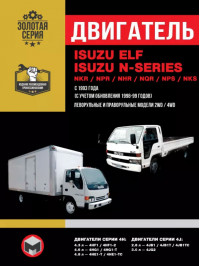
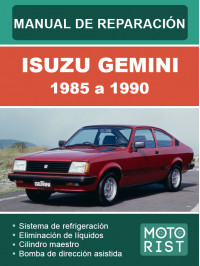
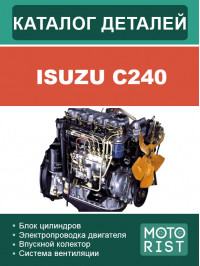
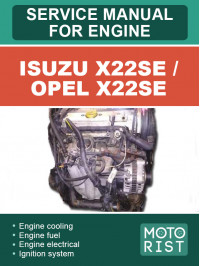
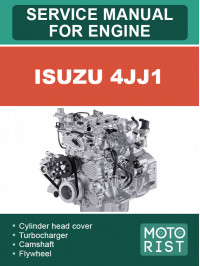
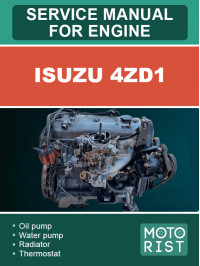
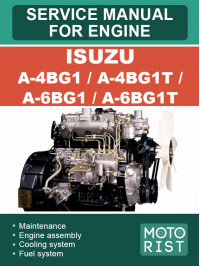

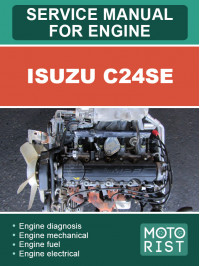
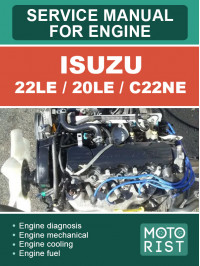
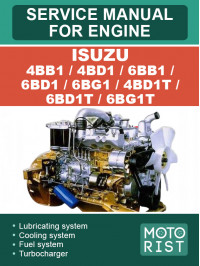
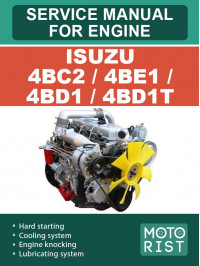
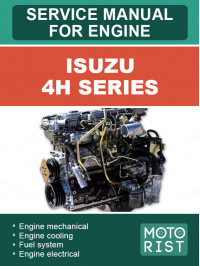
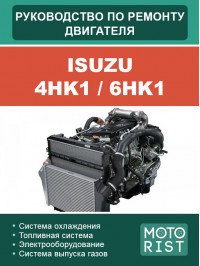
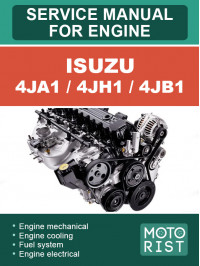
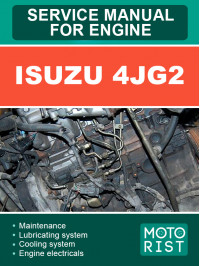
The history of Isuzu engines goes back almost a century. The company began producing power units back in 1936, introducing the first diesel engine in Japan, the DA6. This was a turning point, since diesel engines were considered an exclusively industrial solution at that time.
However, Isuzu focused on the development of diesel technologies, later becoming one of the world leaders in this area. In the post-war years, the brand focused on the production of trucks and buses equipped with its own diesel units.
By the early 1970s, equipment was exported to the United States, where Isuzu engines were recognized for their reliability and durability. In cooperation with General Motors, the company began supplying engines for Chevrolet, Opel and Honda vehicles.
It was during this period that models such as 4JB1, 4JG2 and 6VD1 became widely known. In the 2000s, a new stage began - Isuzu focused exclusively on commercial and diesel vehicles, bringing the range of power units to a qualitatively new level.
Types of Isuzu engines
Today, Isuzu engines are installed on N and F series trucks, D-Max pickups, MU-X SUVs, buses, special equipment and stationary units. Among the most well-known models, it is worth noting the diesel engines 4JB1 (2.8 l), 4JG2 (3.1 l), 4HK1 (5.2 l), 6HK1 (7.8 l), 6BG1 and 6UZ1 (9.8 l).
They cover the spectrum from light commercial vehicles to heavy vehicles and generator sets. All engines are characterized by high maintainability and long service life.
For example, 4JB1 is considered one of the most durable diesel engines in its class - its service life with proper operation exceeds 500,000 km.
The 4HK1 unit used in NQR and NPR trucks combines compact dimensions, an electronic Common Rail injection system, turbocharging with an intercooler and compliance with Euro-4 and Euro-5 standards.
The 6HK1 model is used in heavy trucks, it is capable of operating around the clock with heavy loads.
The technical features of Isuzu engines lie in their well-thought-out architecture. Many models use a cast-iron cylinder block, which provides rigidity and resistance to overheating.
The attachments have a modular design, which facilitates maintenance. The timing drive can be belt or gear, depending on the model.
Modern versions are equipped with exhaust gas recirculation (EGR) systems, electronic fuel injection control, and variable geometry turbochargers.
Older versions, such as 6UZ1, use gear transmission and high-pressure injection.
The engines are characterized by stable operation even when using low-quality fuel, which makes them in demand in countries with severe operating conditions. High torque is available from low revs, which provides excellent traction under load. The simplicity of the design allows using standard tools for maintenance, and the resistance to overheating provides a safety margin under overload conditions.
Isuzu Engine Repair Manual
For Isuzu equipment owners, a professional repair manual in PDF format will be an indispensable assistant.
The manual covers both mechanical parts (timing belt, piston group, cylinder head) and electronic ones (crankshaft sensors, camshaft sensors, pressure regulators, EGR valves and turbines). It also provides tolerance and clearance tables, step-by-step procedures for replacing components, wiring diagrams and recommendations for software adaptation when replacing the control unit.
For Common Rail engines, procedures for resetting errors, pumping fuel, cleaning EGR valves and regenerating the particulate filter are described. Thanks to this, the mechanic receives comprehensive information for servicing the engine at the dealer service level.
Using the PDF manual, you can solve a wide range of problems, such as:
unstable starting at low air temperatures;
- vibrations and unstable idling;
- loss of power under load;
- increased fuel and oil consumption;
- overheating during long-term driving uphill;
- appearance of error codes related to the fuel injection pump, pressure or temperature sensors;
- oil leaks from the pan or valve cover;
- extraneous noise from the chain, turbine or balance shafts.
This document also includes detailed instructions for diagnostics, disassembly, maintenance and assembly of the engine. It specifies tightening torques, sensor connection diagrams, error codes, injection parameters and pressure in the Common Rail system.
The manual also helps to competently perform major repairs, including replacing rings, liners, seals and adjusting valves. This is an indispensable tool for auto mechanics, service station owners and simply experienced drivers. Thanks to its clear structure and the presence of diagrams, the document saves time and reduces the risk of errors during repairs.