


Repair and service elevators in the eBook
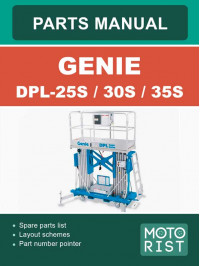
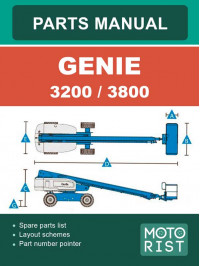
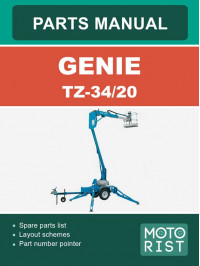
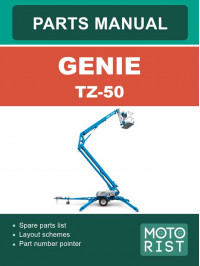
Lifting devices have existed since ancient times — even in Ancient Rome, mechanisms with pulleys and winches were used for constructing buildings and arenas. However, modern lifts, as machines for vertical transportation of people and goods, began to develop in the 19th century.
In 1852, American Elisha Otis invented the first safety elevator equipped with a mechanism that stopped the cabin in case of rope failure, and demonstrated it in New York. This marked the beginning of the entire lifting equipment industry.
History of Lift Development
In the second half of the 20th century, industrial lifts appeared: scissor, telescopic, mast, and articulated types, used in construction, warehouses, auto service centers, utilities, and industry. In the USSR, lifts were widely produced on truck chassis (AGP, PSS), as well as stationary freight elevators and electric hoists.
Today, lifts come in great variety — from compact mobile units for ceiling maintenance to powerful articulated systems with lifting heights over 50 meters.
Technical Specifications of Lifts
Lifts vary by design, drive type, and application. Main types include:
- Scissor lifts — the platform rises through unfolding metal structures like scissors. Used indoors and on facades.
- Telescopic lifts — the boom extends in sections, allowing significant height access. Common in utility and construction work.
- Articulated lifts — composed of several sections connected with joints. Provide access to hard-to-reach areas.
- Mast lifts — the platform moves vertically along a guide rail. Used for lifting people and cargo.
- Truck-mounted lifts — lifting arms or baskets mounted on truck chassis for mobility.
- Automotive lifts — two-post, four-post, and scissor types used in vehicle repair and maintenance.
Key technical parameters:
- Load capacity — from 150 to 10,000 kg depending on type;
- Lifting height — from 3 to 60 meters;
- Drive — electro-hydraulic, electromechanical, or manual;
- Power — from 220/380 V mains, batteries, or internal combustion engine;
- Lifting speed — from 0.1 to 0.5 m/s;
- Safety systems — locks, overload limiters, emergency valves.
Popular manufacturers: Haulotte, Genie, JLG, Niftylift, PSS-121.18E, BelRusPodjom, UPP-2000, and Chinese brands XCMG, Zoomlion, Dingli.
Lift Repair Manual
PDF manuals for operation, maintenance, and repair are available for all lift models. These documents are essential for both operators and service teams.
Typically, the manual includes:
- Diagrams of hydraulic systems, electrical circuits, boom mechanics;
- Daily inspection and scheduled maintenance procedures;
- Troubleshooting and fault elimination algorithms;
- Detailed guides for disassembling hydraulic cylinders, pumps, and valves;
- Pressure, clearance, and torque specifications;
- Error code tables (for models with ECU);
- Safety protocols for operation and servicing.
Most modern models include self-diagnostics, with details covered in the PDF documentation.
Even the most reliable lifting equipment may fail — especially in dusty, cold, or high-use environments. With the help of a PDF manual, issues like the following can be resolved quickly:
- Lift does not raise — check oil level, hydraulic pump, valve condition;
- Slow lifting — clogged filters, low system pressure, worn seals;
- Oil leaks — replace seals, repair hydraulic cylinders;
- No power — diagnose control unit, relays, contactors;
- Boom does not extend — check extension sensors and carriage condition;
- Operational noise — air in hydraulic system, worn bearings;
- Display error — decode and fix using the error code table in the manual.
PDF lift repair manuals allow both basic diagnostics and major repairs — especially useful for small companies without in-house service teams.