Repair and service bulldozers in the eBook





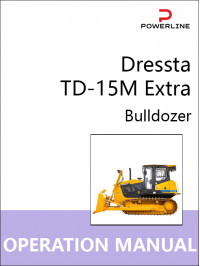


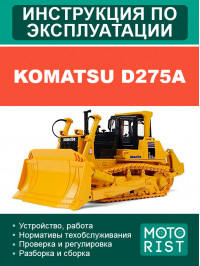
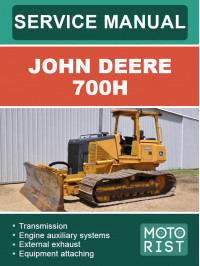
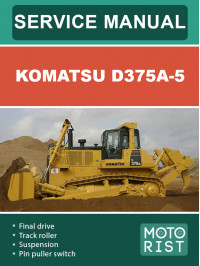
The bulldozer as a construction machine first appeared in the early 20th century in the United States. The initial machines were tractors fitted with a metal blade—allowing earth to be moved by manually operated levers.
Over the years, designs improved: crawler chassis became standard, hydraulic blade control was introduced, and operator cabins were equipped with dust and vibration protection.
History of Bulldozer Development
By 1923, Holt Manufacturing (later part of Caterpillar Inc.) produced the first full-fledged bulldozer unit. From that point on, bulldozers were widely used in road construction, logging, mining, and agriculture.
Between the 1950s and 1970s, bulldozers became essential to major construction and industrial projects around the world. In the Soviet Union, machines like the ChTZ T‑130 and DZ‑42 were widely used on projects such as BAM and in Siberia. In the 21st century, top manufacturers include Caterpillar, Komatsu, Shantui, Liebherr, Dressta, Zoomlion, and ChTZ.
Today’s bulldozers are powerful machines equipped with electronics, navigation systems, climate control, and telemetry. However, their primary job remains the same: reliably moving large quantities of earth and grading land.
Technical Specifications of Bulldozers
Modern bulldozers vary by weight, drive type, and blade design. Key selection parameters include:
- Machine weight: from 5 to 100 tons. For example, the Komatsu D65 weighs around 21 t, while the giant Caterpillar D11 exceeds 100 t.
- Engine: turbocharged diesel ranging from 80 to 850 hp. Common brands include Cummins, Caterpillar, Weichai, and YaMZ.
- Drive type: crawler chassis that ensures off-road capability in mud or rocky terrain.
- Blade types: straight (S-type), semi-U (U-type), universal (SU), tilt/or angle blade, or ripper. Material capacity ranges from 2 to 34 m³.
- Speed: typically 8–12 km/h. Some models feature PowerShift or hydrostatic transmissions.
- Operator cabin: enclosed with vibration and sound insulation, climate control, and diagnostic monitors. Newer models offer GPS and 3D grading assistance.
Examples of popular models:
- Shantui SD16: a 17‑ton bulldozer with 160 hp and a 4.5 m³ blade.
- Caterpillar D6K2: 14.5‑ton machine with 130 hp, joystick-controlled.
- ChTZ B10M: a legendary domestic model with a mechanical transmission, easily serviced in the field.
Bulldozers are used in quarries, logging sites, road construction, land reclamation, mining, and disaster clean-up operations.
Bulldozer Repair Manual
PDF repair, maintenance, and diagnostic manuals are available for almost all models—both modern and historical. These guides are especially important where official service centers are unavailable or urgent field repairs are needed.
The manual includes:
- Technical specs for the engine, transmission, and hydraulic system;
- Maintenance intervals: oil, filter, and fluid change schedules;
- Step‑by‑step repair instructions—from clutch adjustments to hydraulic pump replacement;
- Electrical and hydraulic schematics with explanations;
- Torque specs, clearances, tolerance tables, and part markings;
- Diagnostic trouble codes and decoding methods (for modern models with onboard electronics).
The manual is structured by system: power unit, undercarriage, attachments, cabin, and controls. Each section includes photos, diagrams, charts, warnings, and recommendations.
Even reliable bulldozers require occasional repair. With the PDF bulldozer repair manual, even a non-professional can understand the machine’s structure and perform basic service or repairs. This is especially crucial on construction sites, in quarries, in remote northern areas, or in taiga regions where service is limited and equipment must work daily.