


Information on repair and maintenance of engine Hino cars electronically
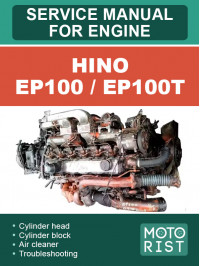
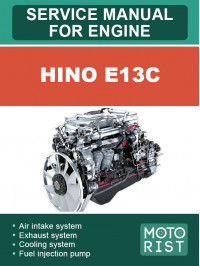
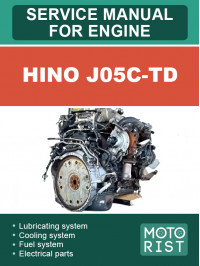
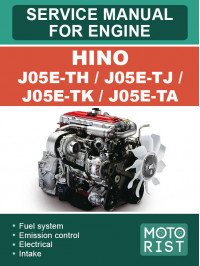
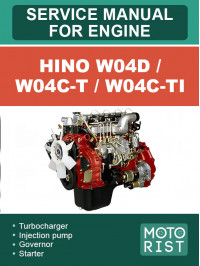
Hino Motors, a part of the Toyota Group, began its development back in the 1910s. Initially, it was a division of the Tokyo Gas Industry Company, and in 1942, Hino entered the market as an independent manufacturer of diesel engines.
Already in the first post-war years, the company focused on the development of heavy engines for trucks and buses, which determined its specialization for decades to come.
History of Hino engines
Hino was the first Japanese company to establish mass production of diesel engines, which were distinguished by their durability and ease of maintenance. In the 1960s, Hino was already exporting engines and equipment to more than 60 countries.
In 1967, strategic cooperation with Toyota began, thanks to which Hino engines began to be used not only in trucks, but also in buses, SUVs and construction equipment.
Today, Hino engines are used in the entire range of commercial vehicles: from light trucks of the Dutro series to heavy-duty Profia mainline tractors.
Also, engines of this brand are used in Isuzu buses, in Komatsu, Tadano equipment and some Toyota models (for example, Land Cruiser 70 in export versions).
Technical features of Hino engines
Hino engines are, first of all, diesel engines with cast-iron blocks, a reliable fuel system and a large resource reserve. All models are designed taking into account long-term operation under high loads, therefore they are especially in demand in countries with severe road and climate conditions.
Typical features of Hino engines:
- high strength of the piston group and crankshaft;
- constructive maintainability - most engines are designed for major repairs;
- durable fuel system (mechanical or Common Rail Denso);
- electronic control (ECU) with diagnostic output;
- turbocharging with intermediate air cooling (intercooler);
- ease of maintenance and availability of spare parts.
The most common lines:
- H07C / H07D - 6-cylinder naturally aspirated and turbocharged diesel engines 7.4 l, were used from the 1980s to the 2000s on Ranger trucks, equipment with such engines operates up to 1,000,000 km without major repairs.
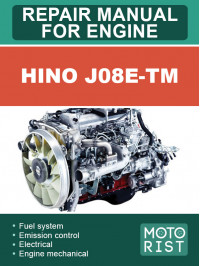
- J05E / J08E - modern diesel engines with a volume of 4.7 and 7.7 liters, installed on Dutro, Ranger and buses. Equipped with EGR and DPF systems, comply with environmental standards Euro 4-6.
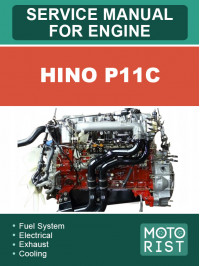
- P11C / E13C - 6-cylinder rows with a volume of 10.5-12.9 liters, the flagships of the Profia series, develop up to 520 hp. and are designed for long-haul operation with trailers.
These engines can have air-oil coolers, exhaust gas recovery (EGR) and diesel particulate filters (DPF), and in the latest versions - an AdBlue injection system (SCR) to reduce nitrogen oxide emissions.
Hino Engine Repair and Maintenance Manuals
Official PDF manuals are available for all Hino engine lines, covering maintenance, diagnostics and overhaul. Such documents are relevant for both service stations and independent mechanics, especially when operating equipment in remote regions.
The most important sections of PDF documentation:
- specifications for valve clearances, tightening forces, injection moments;
- procedures for removing/installing attachments;
- adjusting the high-pressure fuel pump (in mechanical versions) or diagnosing Common Rail injectors;
- diagrams of oil, fuel and cooling circuits;
- tables of error codes and description of the functions of the ECU control unit;
- algorithms for DPF regeneration and resetting errors in the EGR system;
- instructions for major repairs of the cylinder block, head, crankshaft, turbocharger.
PDF manuals are especially useful when rebuilding P11C or J08E engines after a mileage of over 500,000 km, when a complete revision or replacement of the group is required. They also contain electrical diagrams, descriptions of diagnostic connectors and procedures for initializing new components after installation.
Thanks to the robust design, simple fuel system and accessible repair books for Hino engines, they are deservedly considered one of the most reliable in the commercial segment. Their resource, with proper maintenance, exceeds 800,000 km without major repairs, and competent diagnostics according to the manual allows you to eliminate even rare malfunctions in the field. This makes Hino the optimal choice for those who value reliability and predictability in the long term.